

Nobel laureate
joins WSS
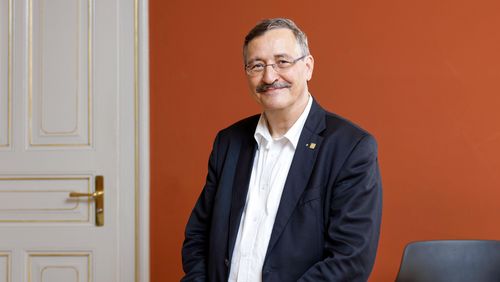
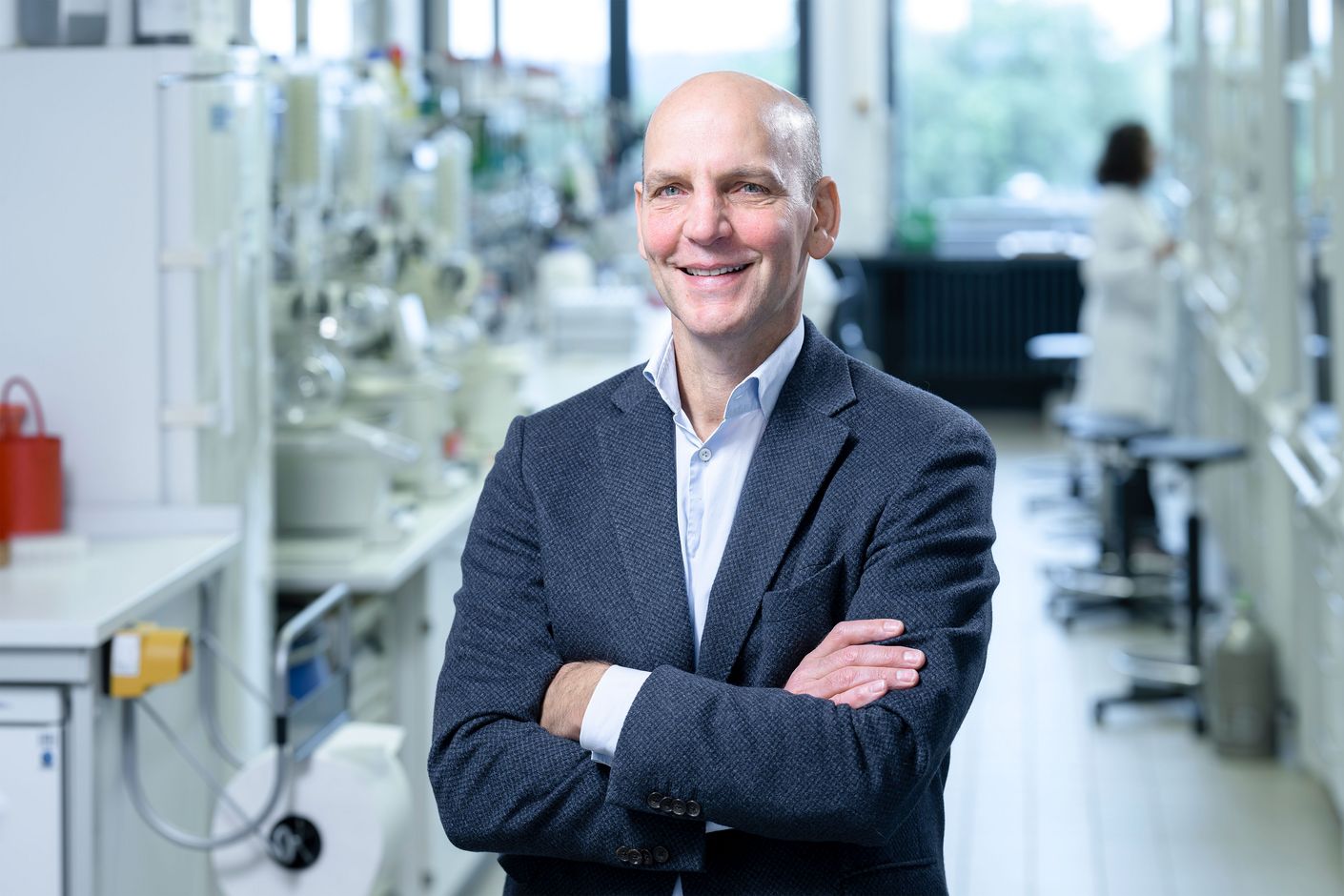
The Werner Siemens Foundation is pleased to welcome Benjamin List to the Scientific Advisory Board. The winner of the 2021 Chemistry Nobel Prize and Director at the Max-Planck-Institut für Kohlenforschung in Mülheim an der Ruhr is succeeding Matthias Kleiner, who has stepped down after thirteen years on the Advisory Board.
The Scientific Advisory Board at the Werner Siemens Foundation (WSS) is responsible for seeking exceptional research endeavours, assessing them, and at times even refining them through discussion with the applicants. In addition to having an outstanding track record in their field, members are expected to have thorough knowledge of how research and academia function. Seen in this light, it’s a stroke of good fortune that WSS is able to welcome Professor Benjamin List as a new member of the Scientific Advisory Board. List is replacing Professor Matthias Kleiner, who resigned from his position at the end of 2025, in accordance with the Foundation’s statutory age requirements.
Benjamin List—winner of the 2021 Nobel Prize in Chemistry for his discoveries in organocatalysis and Director at the Max-Planck-Institut für Kohlenforschung in Mülheim an der Ruhr—is a highly accomplished researcher with excellent contacts in the scientific community. What’s more, he knows from his own experience what makes for a successful application to WSS, as his proposal for realising the photocatalytic reduction of CO2 into carbon and oxygen was duly accepted and work in the project commenced at the start of 2025. Although he calls his idea “slightly mad”, its success could change the world by enabling the large-scale removal of CO2 from the atmosphere.
List is looking forward to seeking these kinds of groundbreaking research projects on behalf of the Werner Siemens Foundation: “I’m interested in diamonds in the rough—revolutionary ideas that nonetheless have a realistic shot at delivering results.” Over the course of his career, List has come to believe it’s precisely seemingly mad ideas like these that drive scientific breakthroughs.
Illustrious ancestors
Benjamin List comes from a long line of gifted researchers. His great-great-grandfather was renowned chemist Jacob Volhard, while his great-grandfather Franz Volhard was a prominent nephrologist. Meanwhile, his aunt Christiane Nüsslein-Volhard preceded him as a Nobel laureate, winning the 1995 Nobel Prize in Physiology or Medicine for her work on the genetic control of early embryonic development.
List grew up in Frankfurt am Main and studied chemistry at the Freie Universität Berlin. After writing his doctoral thesis on synthesising the vitamin B12 molecule, his path led him to the United States. There, at the Scripps Research Institute in La Jolla, California, he first began investigating catalysis-driven antibodies and, shortly after he was appointed assistant professor, made the discovery that would lead to the Nobel Prize: he demonstrated that a small organic molecule—the amino acid proline—can be used as a catalyst. With his discovery, he established the field of organocatalysis, a catalytic process that functions without metal compounds, which have the drawback of being expensive and detrimental to the environment.
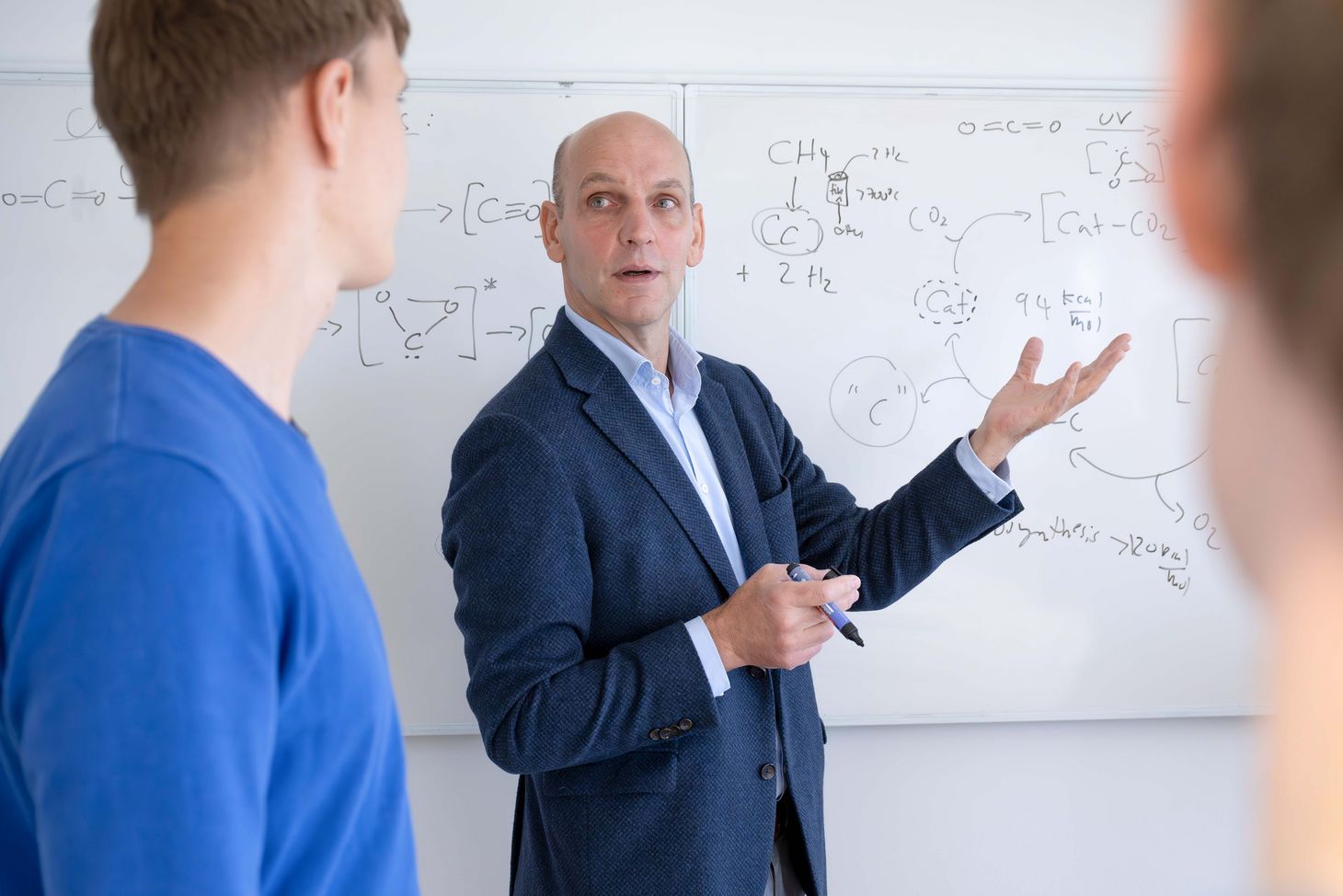
In the meantime, organic catalysts have become a standard feature in the chemical industry, particularly in pharmaceutical development. Here, they can be used to precisely control reactions, which in turn prevents the formation of unwanted by-products. The defining feature of organic catalysts, however, is that they enable synthetic organocatalysis processes that generate just one specific enantiomer of a molecule. An enantiomer is a pair of molecular entities that are mirror images of each other, comparable to our left and right hands, that often have different chemical properties.
Welcoming risk
Benjamin List’s early experiment with proline produced results quite quickly, but it also represented a step into unknown territory. He says the experience acquainted him with certain feelings of trepidation that arise when a researcher dares to try something that is new, maybe even unconventional. However, winning the Nobel Prize has inspired him to talk about how he courts this feeling and why he chooses to pursue ideas that might generally be viewed as somewhat far out.
List says he also enjoys encouraging other scientists to take risks in their research—indeed, he believes it’s the only way to achieve true scientific advances. “Most people feel comfortable in the safety of community. They like to sit round the campfire and sing ‘Hotel California’,” he says. “But ultimately, the person who dares to enter the dark forest alone will make the discovery that brings humankind forward.”
This also explains why he holds the Foundation’s appetite for risk in such high esteem. When submitting proposals to other funding organisations, researchers are often asked to refer to previous publications or otherwise demonstrate that the project will be successful. “WSS is much less risk-averse. This quality, in combination with the generous funding and the Foundation’s lean management, is fantastic.”