

Converting granite into a massive battery
In summer, solar panels often generate more electricity than we need. In winter, by contrast, we need more energy than they can produce. At ETH Zurich’s BedrettoLab, researchers are testing a technology capable of closing this persistent gap between supply and demand. Their solution is surprisingly simple: they want to store surplus heat in subterranean rock.
Solar panels and wind farms produce more electricity when the sun shines or the wind blows. However, human energy consumption follows a different logic, with demand rising in winter, precisely when solar power generation is at its lowest. It’s a fundamental problem that has hindered progress in the clean energy transition—and that highlights the need for long-term energy storage methods.
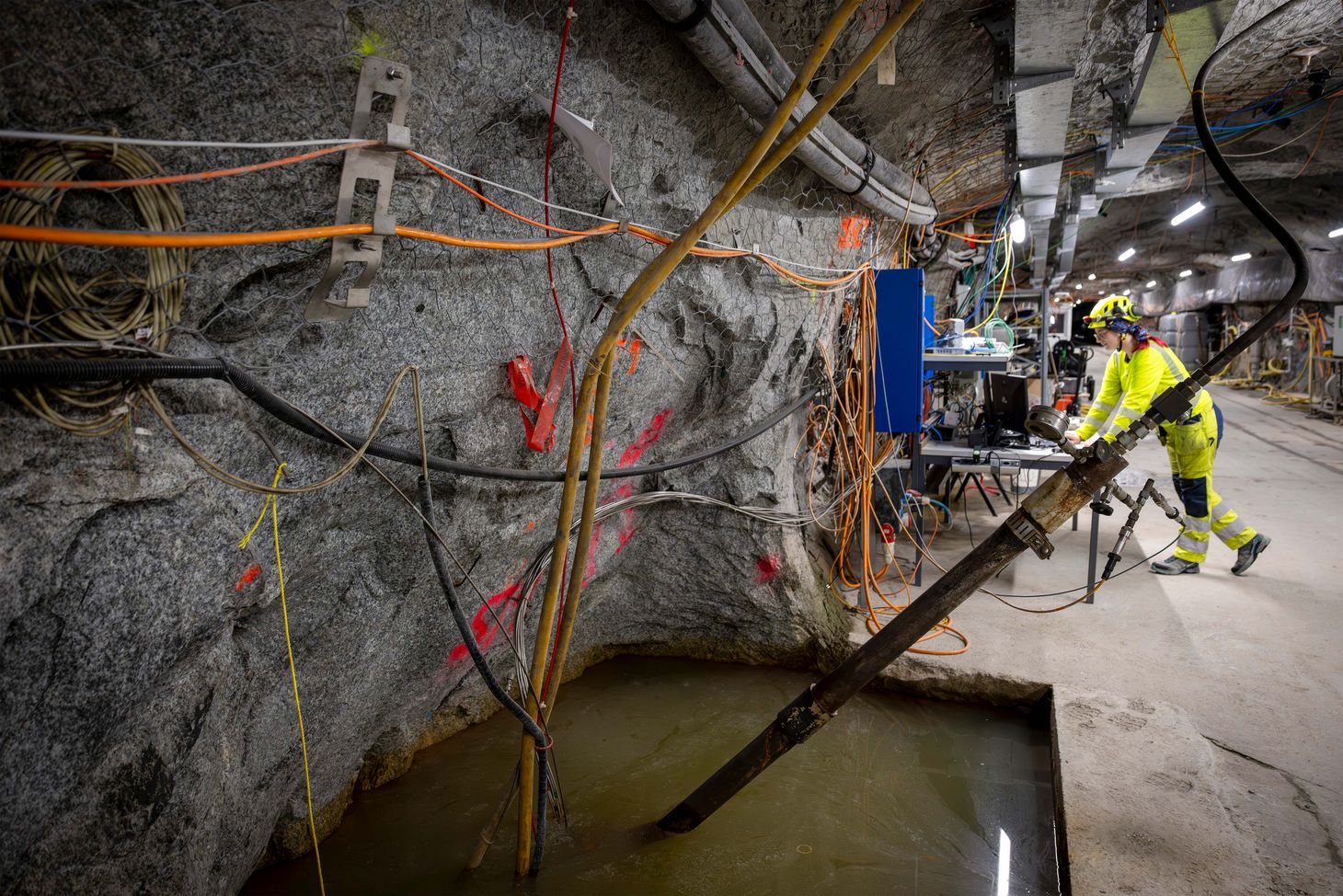
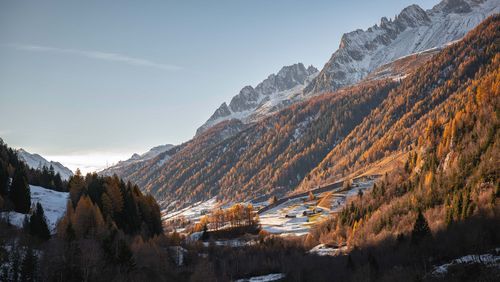
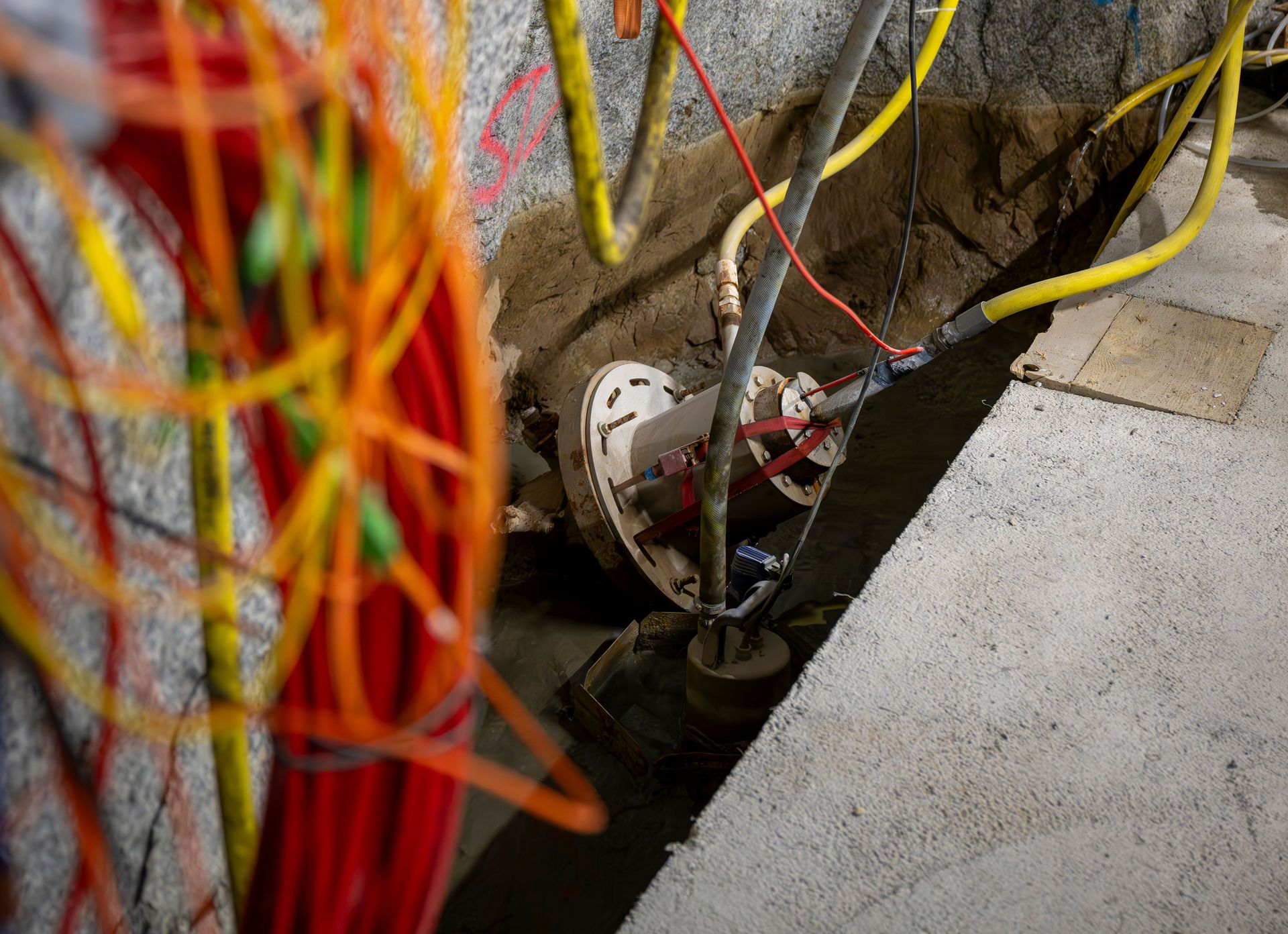
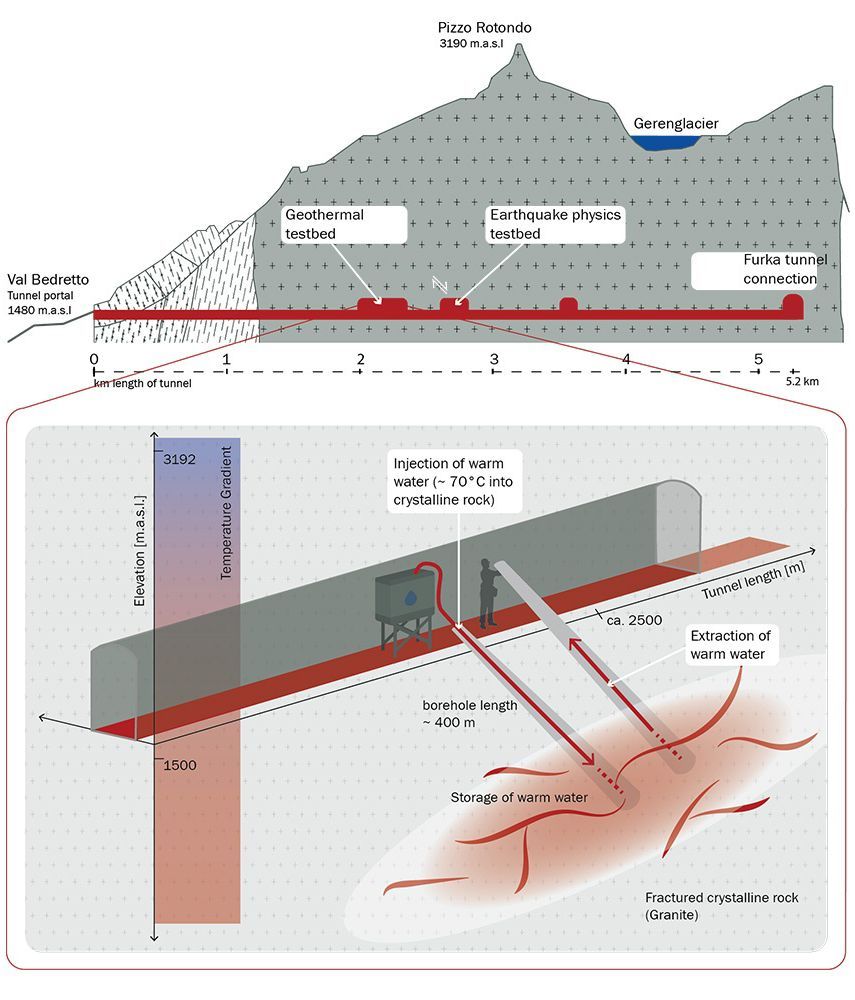
Developing one such storage method is the aim of the BEACH project at ETH Zurich. BEACH (Bedretto Energy Storage and Circulation of Geothermal Energy) is conducted at the WSS-funded BedrettoLab, which is located in a former ventilation shaft of the Furka Base Tunnel below the Saint-Gotthard Massif in southern Switzerland. Financed by the Swiss Federal Office of Energy, the pilot and demonstration project is dedicated to studying whether heat can be stored in crystalline rock for several months and then later retrieved for power generation.
Rock battery in the mountain
On the surface, the idea is simple: surplus summer energy is used to heat water, which is then pumped into the underground for storage. A few months later, the heat can be brought back up to the surface for electricity production. BEACH project leader Valentin Gischig from ETH Zurich says that these types of systems already exist, but that they’re almost exclusively used in porous sedimentary rock such as gravel or sandstone, as water can distribute itself easily throughout the pores of these rock layers.
The general geological conditions in much of Switzerland, however, are different: granite, gneiss and limestone dominate, especially in Alpine regions. “These types of rock are impermeable and lack pores for water storage,” Gischig says. “But they do have fissures in which water can circulate.”
The idea is to use these fine cracks as subterranean conduits for storing and transporting heat. Gischig says the BEACH project is one of the first research programmes in the world to investigate heat storage in crystalline rock under authentic conditions: “There are only a handful of comparable projects—in the US, or in Tromsø, Norway.”

A mountain full of sensors
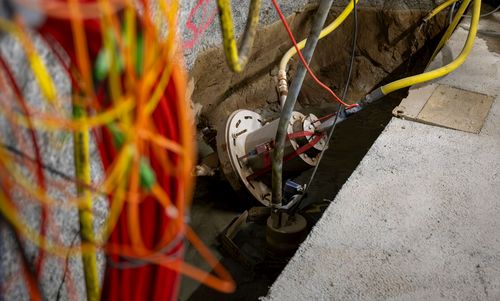
The first experiments in the BedrettoLab were launched in the summer of 2025. “We started with a single borehole and pressed roughly two hundred cubic metres of cold water into it,” Gischig explains. “A few weeks later, we pumped the water back out of the same borehole.” The researchers were initially less concerned with the fact that the entire water volume couldn’t be retrieved; their primary goal was to understand how the water moves in the subsurface.
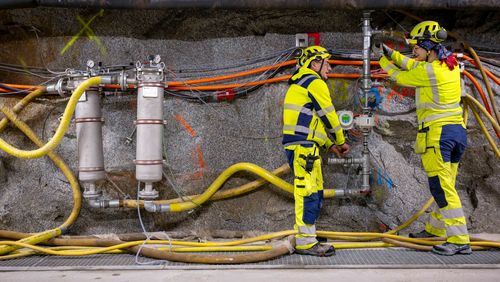
To observe what was happening in the rock, the researchers relied on a seamless monitoring system across the entire test zone. There, sensors continuously recorded temperature differences, minute changes in the rock, and seismic signals. The measurements enabled the team to trace how water and heat spread through the underground.
Tiny amounts of krypton were also added to the water. As a noble gas, krypton forms almost no chemical compounds, making it highly suitable as a tracer. “We wanted to avoid any reactions with microbes living in deep rock layers,” Gischig says. Using high-precision measurement instruments, the researchers were able to chart the krypton tracers and thus gain information on how and where the water flows through the rock as well as on how long it needs to move through specific areas.
A circle of boreholes
The next steps in the project were conducted last autumn and winter, when the researchers injected water that had been heated to roughly eighty degrees Celsius. Over the course of two weeks, water was pumped into the underground rock; the team then waited a week before beginning to retrieve it to the surface. Gischig says the data gathered during the experiments are currently being interpreted. The team is primarily interested in learning how much of the water introduced into the rock layers remains stored there—and how efficiently it can be retrieved.
The project is scheduled to enter a new phase in 2027, when the researchers will begin conducting what are known as “cross-hole experiments”. In this setup, a hydraulic link is created between at least two boreholes. Warm water enters the subsurface via the first hole. Later, in a closely controlled process, water is injected through a second borehole to press the heated water back to the first drillhole for retrieval.
“We could use use higher pressure to bring the water back to the surface, which would significantly improve the retrieval rate,” says Gischig. He adds that, in the long term, the researchers are even considering systems consisting of several boreholes, as findings from similar tests in Tromsø suggest that a circular arrangement of boreholes is best suited for retaining the water’s heat in a localised subterranean zone.
Safety first
How well the technology functions is, however, just one part of the equation. Another critical issue concerns the system’s economic feasibility. To address such practical considerations, BEACH draws on wide-ranging computer simulations and techno-economic assessments. As part of this work, researchers at the University of Applied Sciences and Arts of Southern Switzerland, in Lugano, are studying potential business models and concrete applications, one of which is an incinerator in the city of Bellinzona, where heat is available all year—heat that currently isn’t fully utilised. In future, any surplus summer heat generated by the plant could be stored underground and then used during the cold winter months.
An inevitable question that arises when pressurised water is injected into the rock is whether the procedure will trigger an earthquake; indeed, this aspect is a major focus of all work conducted in the BedrettoLab. “We monitor seismic activity in great detail, and that round the clock,” Gischig says. “If unusual activity were to be detected, the tunnel would close—and the pumps could be operated remotely from Zurich.” In general, however, the researchers take extreme care to remain within the limits of the pressure ranges known to trigger larger seismic events. Gischig notes that no problematic tremors have been observed thus far.
Great potential
While it remains to be seen whether the technology can be used successfully at scale, if the experiments deliver good results, the potential of a “granite battery” is extremely promising, especially as roughly sixty percent of Switzerland’s landmass consists of crystalline rock. Seen in this light, nearly the entire country would benefit from using this geological resource as a seasonal heat reservoir. “We wouldn’t even need to drill down very deep to keep the water warm,” Gischig says, adding that around three hundred metres would be enough—a depth that some drilling companies have reached for heat pumps.
Should BEACH prove successful, the BedrettoLab would be known as the birthplace of a major pillar of Switzerland’s future energy supply. The system would enable the storage of surplus summer heat, close energy gaps arising in winter, and ultimately make better use of renewable sources. In short, the underground could both deliver and store energy.
Text: Simon Koechlin
Translation: Mary Carozza