

Thirsty for knowledge, ready for action
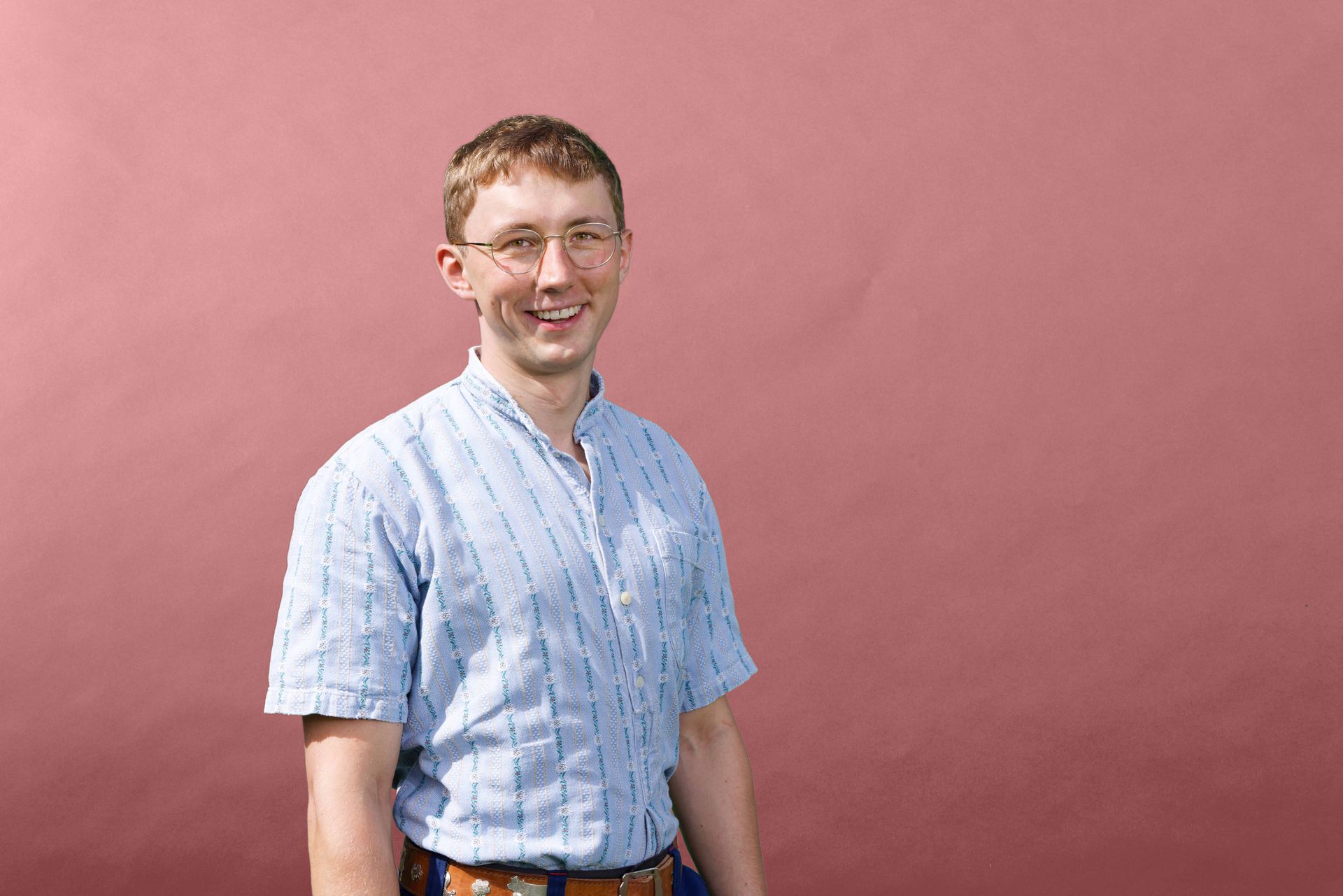
Benedikt Oeschger is interested in the world at large. He studies agricultural science, works at a cattle farm, has a seat in Winterthur’s city parliament, and is active at the Swiss Study Foundation. A Werner Siemens Foundation Excellence Scholarship is helping him stay on top of his game.
From a very young age, Benedikt Oeschger had a clear vision of his professional future. Perhaps inspired by his jurist father, he attended the economic-track at the Büelrain upper secondary school in Winterthur and was on course to study law and economics at the University of St. Gallen. After earning his university entry qualification, he looked for a job as a student assistant at a law firm, just to be doubly certain that he’d made the right decision. But instead of embarking on an illustrious legal career, Oeschger ended up at a crossroads: not one single law firm offered him a place. “I stopped counting after the first sixty applications and phone calls,” he says.
Fortunately, however, Benedikt Oeschger is anything but a one-trick pony— communicative, proactive and ready for action are the words he uses to describe himself. So it comes as no great surprise that he soon found an alternative. His former biology teacher (who for years had been trying to win him over for the natural sciences) told Oeschger about a venture studio that co-creates innovative, market-based start-ups in the area of climate and forest protection.“I took on a student job there and gained in-depth insights into an incredibly fascinating world,” Oeschger relates. That’s also when the idea of studying a subject in the natural sciences began to take shape.
He didn’t need long to decide on the exact discipline: Oeschger’s interest in agriculture and livestock dates back to his childhood. His kindergarten class regularly went on pony-riding excursions, although he readily admits: “Really, I loved mucking out the stable and preferred brushing and feeding the ponies to riding them.” And while other children were mad about lions and elephants, goats were his favourite. “Goats are independent and clever, they provide milk and meat, and they’re also good for maintaining biodiversity,” Oeschger says. “I used to help out at my relatives’ dairy goat farm in Bavaria and wanted to be a goatherd when I grew up.”
A subject that concerns us all
All this was behind Oeschger’s decision to enrol in agricultural science at ETH Zurich. Today, the twenty-three-year-old student is completing his master’s degree and has absolutely no regrets. He says he enjoys the scientific side of the programme, but also the fact that it’s embedded in economics and the social sciences. “When I’m at a gathering and the discussion turns to what people do, the conversation often stays with me and my studies. Agricultural science as a field encompasses nutrition, ecology, politics and ethics—it’s directly relevant to us all.”
It’s also a subject that offers opportunities the whole world over. For instance, Oeschger’s bachelor’s dissertation took him to Florencia, Colombia, a former FARC stronghold. “One of my Colombian instructors said she’d never go there,” he recalls with a mischievous grin. He spent three weeks in the region, and although the roadside checkpoints took some getting used to, he never felt unsafe.
His bachelor’s dissertation was part of a project for sustainably increasing the productivity of pastures—with the ultimate aim of reducing the need to deforest the Amazon rainforest. For his dissertation, Benedikt Oeschger harvested samples from pastures containing legumes and Urochloa (or signalgrass) to quantify the plants’ phosphoric content in relation to nitrogen supply. Legumes such as clover in Swiss meadows are well known for their ability to fix nitrogen—the most important plant nutrient—in the soil. Some Urochloa cultivars, which are used as livestock feed in Colombia, contain active compounds that minimise nitrogen loss in the soil. It’s believed that mixed cultures consisting of both plant types could potentially increase crop yields.

Between America and Appenzell
For his master’s degree, Oeschger switched from plants to his great love—livestock—and opted for a specialisation in animal sciences. As part of the programme, he spent an exchange semester at the Department of Animal Sciences at Purdue University in Indiana. He explains that the way agricultural science is taught in the US is very different to how it’s done in Switzerland. The main focus in the US is on productivity and specialisation, he says, adding that systems thinking is hardly a feature there, and animal welfare practices are essentially limited to ensuring that livestock are healthy enough to maximise profits.
His view of modern agriculture is very different. “To me, productivity is important,” he says, “but it has to be embedded in an overall agricultural system under consideration of animal welfare and the environment.” Despite the differing viewpoints, however, he very much enjoyed his stay in the US, especially the competitive spirit he experienced in events like the Intercollegiate Dairy Challenge, in which students from across the US and Canada competed to see who could provide the best advice to dairy farms. The decidedly practical approach to studies at Purdue was another positive aspect: “We students were given plenty of opportunities to work with animals. For example, we were entrusted with inseminating goats—something that would be pretty much unthinkable in Switzerland.”
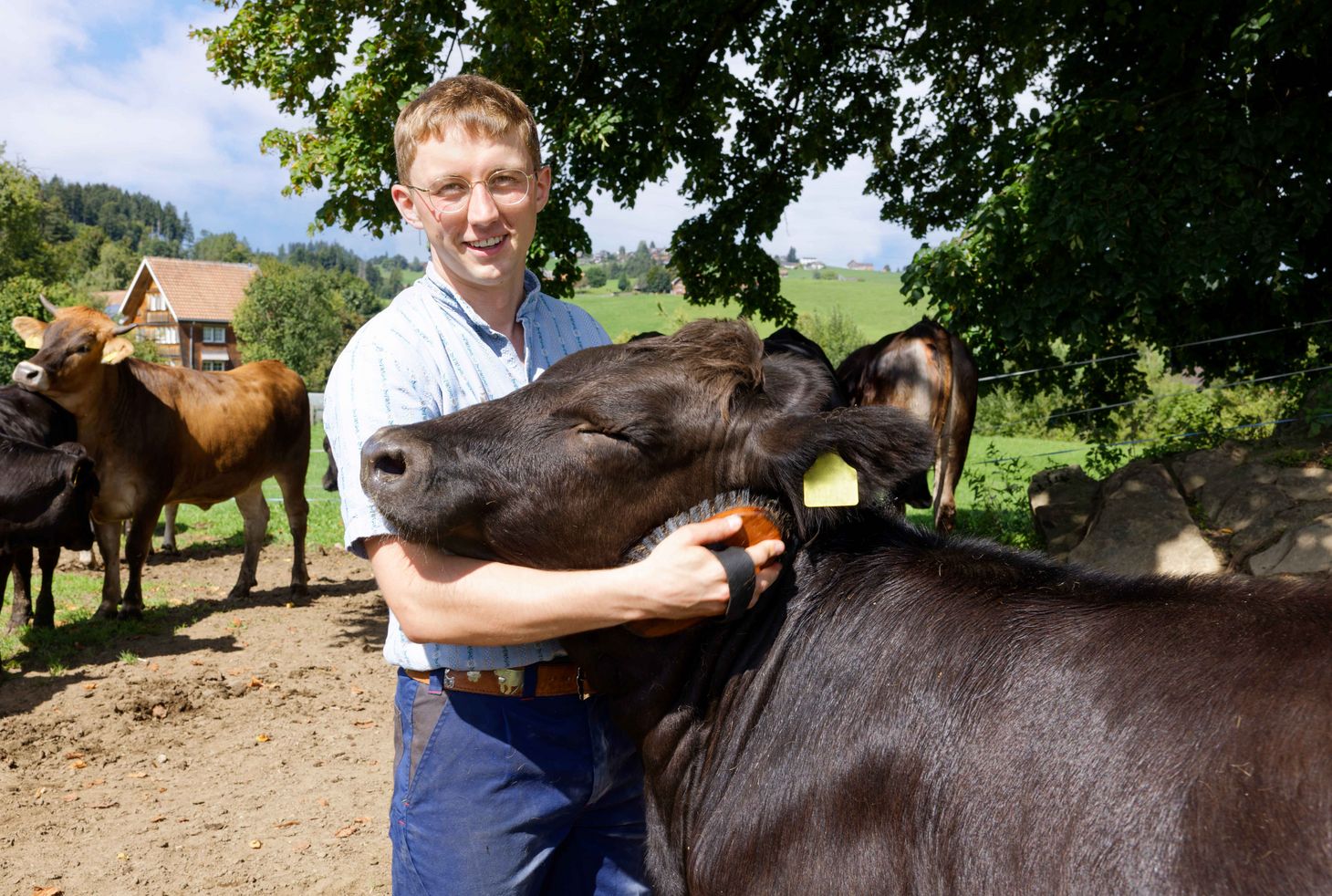
Back at home, Benedikt Oeschger has found a way to continue working with farm animals. The parents of his best friend from university run an innovative farm in the Canton of Appenzell Ausserrhoden, where they grow wheat for a beer brewery. In return, they use brewery by-products such as spent grains and yeast to feed their cattle. Oeschger completed his internship for his bachelor’s degree at the farm, where he still helps out on a regular basis. “I enjoy farm work, and it’s a nice change from studying,” he says.
Youngest member of city parliament
In addition to his studies, politics are another major sphere of activity in Benedikt Oeschger’s life. This interest, too, dates back to his childhood. At primary school, for example, he started a petition to retain the school’s library, and he wrote a letter to Winterthur’s city council calling for the renovation of the school’s fountain. Later, at his secondary school, he founded the student climate action group and wrote his final thesis on how approaches from behavioural economics can be used for climate and environmental protection.
At his school graduation party, Oeschger caught the attention of a politician from the Green Liberal Party—and he soon figured on the party’s list of candidates for the upcoming local elections. He topped the list of substitutes for city parliament and, in 2023, was invited to fill a vacancy left by a departing colleague—and so became the youngest person in the sixty-member body. Oeschger says the amount of work required for his political duties shouldn’t be taken lightly: city parliament meets on a monthly basis, plus three additional meetings per month scheduled for the preliminary consultation committee on social services and security, where Oeschger has a seat. Then there are various preparations, informal meetings and media events.
Oeschger says his political work is very fulfilling. “It’s a meaningful, public-spirited activity.” It’s also something he benefits from personally. As a committee member, he has been invited to inspect the new locale for the city’s youth counselling centre, and he has shadowed nursing staff in outpatient care to gain first-hand insights into the practices. Once, he even embedded with the police for a night shift. “All these experiences have given me a more nuanced understanding of how public services operate,” he says.
A welcome scholarship
Benedikt Oeschger also participates in the educational and networking programmes offered by the Swiss Study Foundation, which has supported him since the start of his studies. At the Study Foundation, he attends events such as criminal law seminars, rhetoric courses and coding workshops. One of his favourites so far was a two-week summer school focusing on the food and nutrition system in Kenya.
He and a colleague also organised and led a Study Foundation seminar on the forestry and wood industry, during which participants tracked value chains and visited a forestry service, a sawmill and the Zurich “woods laboratory”. Oeschger also led another seminar on meat production that included a tour of the Appenzell farm and an abattoir. “I think it’s important that these events offer more than just lectures in the lecture hall,” he says.
Benedikt Oeschger will represent scholarship recipients on the Swiss Study Foundation Board for two years starting in 2026. He has already been awarded a Werner Siemens Fellowship by the Swiss Study Foundation for two funding periods. The fellowships, which are given annually to ten outstanding students in the STEM subjects, medicine or pharmaceutical sciences, are excellence scholarships that enable ambitious and gifted young people to focus their energies on their education and their personal and professional development.
The WSS scholarship helped Benedikt Oeschger finance his exchange semester in the US, and it has generally enabled him to concentrate on his studies while also simultaneously pursuing his many other interests. Thanks to this support, he can step in when a local association needs volunteers and take on an active role in Winterthur’s society for the natural sciences.
A PhD? Maybe
The soon-to-be agricultural scientist still has two hurdles to clear before finishing his studies. After his final semester, he’ll work as an intern in poultry research at Aviforum, a centre of excellence in Swiss poultry farming. And then, of course, he’ll write his master’s dissertation. While he’s certainly not at a loss for ideas, he says he’s still discussing various aspects and options with different institutions.
And what will come afterwards? “Well, I find research fascinating, so I can imagine a PhD programme,” he says. “But a degree in agricultural science offers a lot of really interesting employment opportunities—at an industry association, for example, or an international firm.”
Although it’s not yet entirely clear how his career will unfold, even a short conversation with Benedikt Oeschger is enough to discern that he’s an enterprising young man who absorbs knowledge and gathers experiences wherever he can. All these experiences are puzzle pieces that will guide him on his future path.