


Novel chlorine chemistry
Chlorine is a common and important commodity chemical. However, handling it in its gaseous state is challenging, and conventional chlorine chemistry consumes large quantities of fossil fuels. This is now set to change thanks to a team of researchers at Freie Universität Berlin, whose chloride-based reactive ionic liquids enable the extraction of high-value materials from electronic waste, biomass—and even contaminated landfills. The project has recently been awarded funding from the Werner Siemens Foundation.
Without chlorine, modern society would look very different. It’s used as a disinfectant in drinking water to kill dangerous bacteria and viruses, and it’s an important component in products as diverse as medicines, plastics and batteries. Chlorine also enables countless chemical processes in industrial manufacturing and, last but not least, it’s essential in the manufacture of computer chips and high-tech materials. Despite its many advantages, however, chlorine has a rather dubious reputation: just the smell of a swimming pool can serve as a reminder of its negative ecological impacts and, in Europe, bleached chicken is generally viewed as the embodiment of an unhealthy, profit-driven food industry.
Chlorine chemistry is also known to be energy-intensive—and when fossil fuels are the energy source, the climate suffers. Every year, the German chemical industry produces roughly 5.5 million metric tons of chlorine gas (Cl2), generally through the electrolysis of sodium chloride (NaCl) and water (H2O). This production accounts for approximately 2.3 percent of the country’s entire power consumption. And because chlorine is toxic in its gaseous state, both its storage and transport are subject to extremely complex and expensive safety regulations.
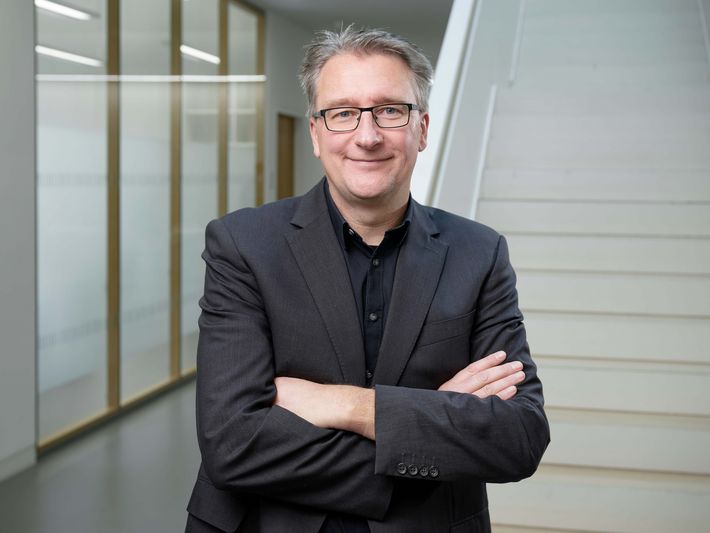
Now, a research team led by Sebastian Hasenstab-Riedel, professor of inorganic chemistry at Freie Universität Berlin (FU Berlin), is developing an innovative technology to solve these problems—and simultaneously laying the groundwork for a safer and more sustainable chlorine chemistry industry. The Werner Siemens Foundation (WSS) is supporting the new “WSS Resources” project with a grant of eighteen million euros over the next ten years.
Safe chlorine storage
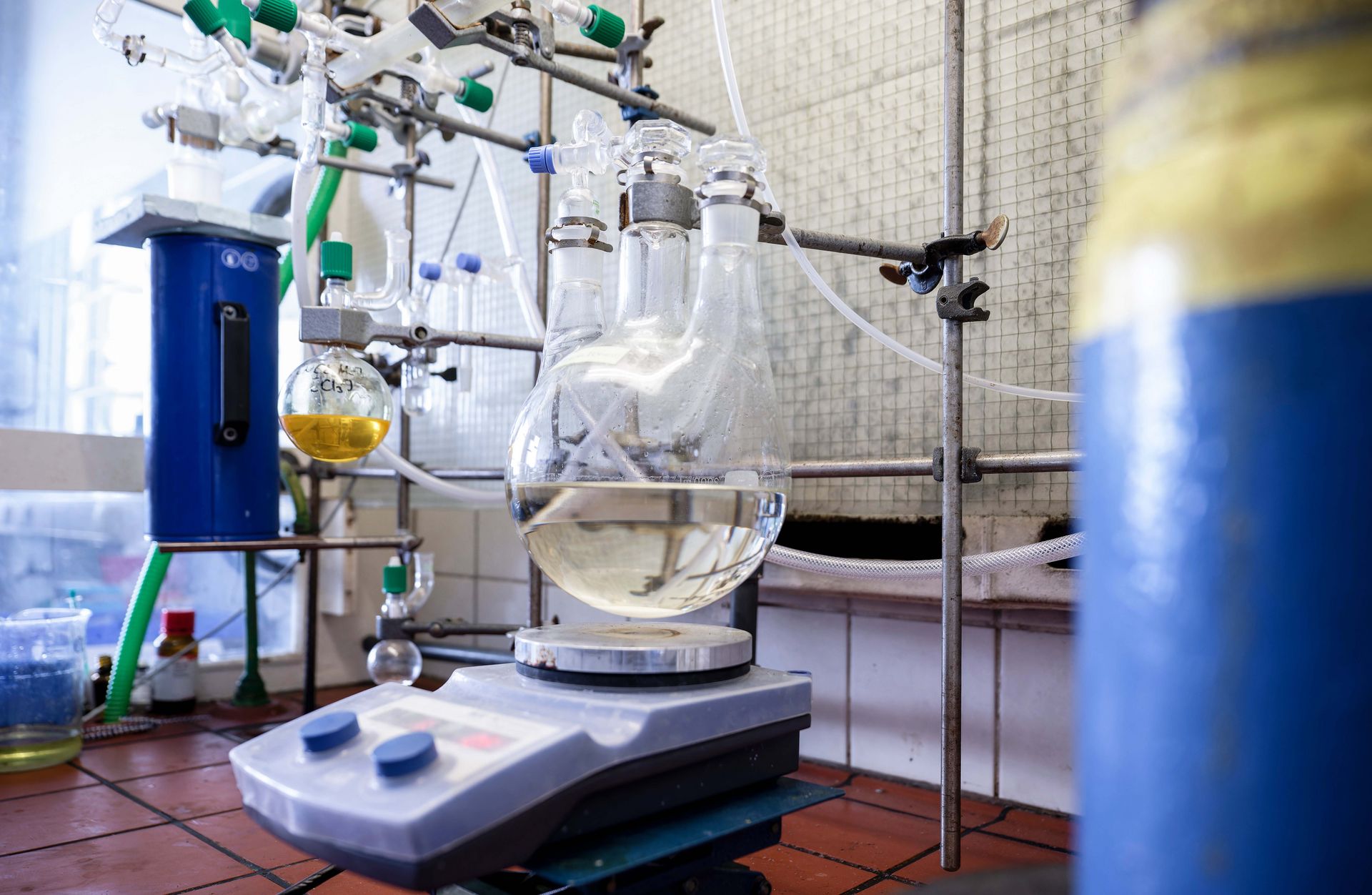
The central component of the project are the ionic liquids that Hasenstab-Riedel and his team have developed in recent years. Ionic liquids are salts that are liquid at room temperature and that can absorb large amounts of chlorine with low vapour pressure. This type of storage medium chemically binds chlorine gas or hydrogen chloride in liquid form. When slightly heated, the chlorine is released, making it available for production processes, and the liquid salt can be reused.
Hasenstab-Riedel says the innovative chlorine storage system has major advantages: “Because a salt-based fluid is much less hazardous than chlorine gas, it simplifies storage and transport.” Indeed, the solution would enable large quantities of chlorine to be stored safely, and just this one improvement would make chlorine chemistry significantly more sustainable. At present, the chemical industry relies on the permanent availability of fossil fuels for chlorine production, as chemical companies are understandably reluctant to store chlorine gas—to ensure safety, they want to use the substance as soon as possible after production. By contrast, the new liquid storage system could be filled with surplus renewable electricity from solar or wind power production. During times of “dark doldrums”, then, it would be possible to tap into these chlorine reserves and thus free up the electrical grid.
To realise this future scenario, it’s critical that the storage systems are large enough. “A big chemical company would probably need a storage container of about two thousand cubic metres, which is slightly smaller than an Olympic-size swimming pool,” Hasenstab-Riedel explains. “That would be enough to store the amount of chlorine needed for one day’s production.” To ensure this capacity, a key element in the WSS Resources project is designing technical storage solutions that will provide the basis for developing large-scale storage systems.
Advantages for chemical industry
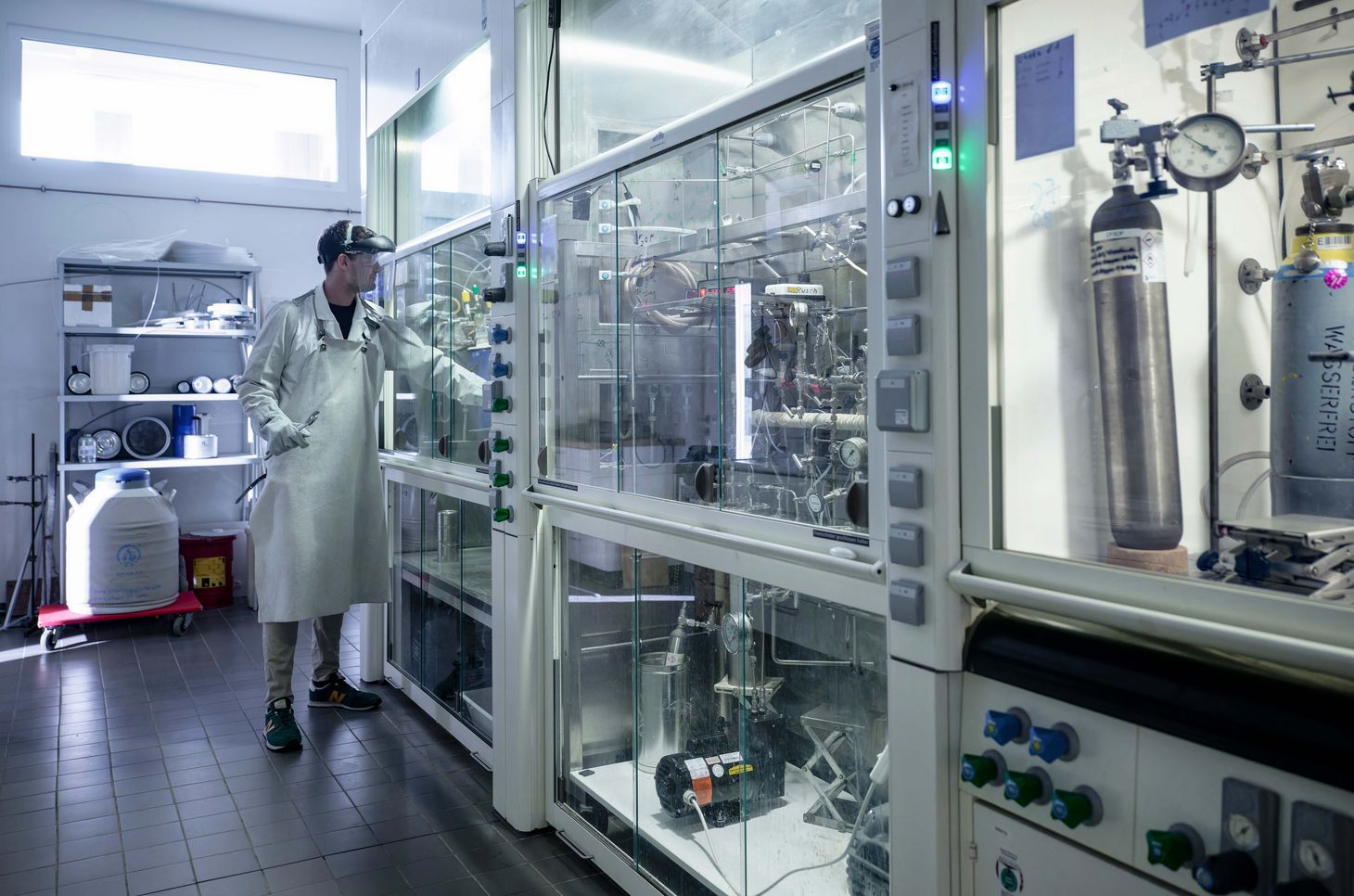
Storage, however, is just one part of the project. Hasenstab-Riedel has put together a team that’s aiming to utilise ionic liquids as an environmentally friendly method of extracting and chemically converting a wide range of resources. The team includes Professor Rainer Haag (organic chemistry, FU Berlin), Professor Timm John (mineralogy and petrology, FU Berlin) and Professor Siegfried Waldvogel (electrosynthesis, Max Planck Institute for Chemical Energy Conversion, Mülheim an der Ruhr). In the new WSS project, they want to demonstrate that the novel ionic liquids can serve as a platform for creating a more sustainable chemical industry.
Their approach is possible because their ionic liquids have yet another critical property: the chlorine contained in them is already chemically pre-activated, meaning it’s more reactive than chlorine gas. “This translates into simpler chemical conversions that take place at lower temperatures and sometimes even without using additional catalysts,” Hasenstab-Riedel says. Another advantage is that the process is safer: rather than working with unpredictable gas mixtures, the researchers use liquids for their reactions.
Biomass valorisation
Researchers in the WSS Resources project plan to use ionic liquids in three specific areas. First, the groups led by Rainer Haag and Hasenstab-Riedel are investigating how the ionic liquids can be instrumentalised to chemically convert biological residues into high-value materials. Haag says glycerol is one example of a waste product with high potential: “Across the globe, the yearly production of biodiesel generates four million metric tons of glycerine as a largely unused by-product.” The idea is to convert glycerol into epichlorohydrin—a versatile chemical intermediate used in the manufacture of modern plastics—and Haag’s team has already developed a method for using the chlorine reservoir to facilitate the reaction. “Currently,” Haag explains, “epichlorohydrin is produced from non-renewable fossil raw materials—from petroleum, in other words.”
Lignin is another common by-product—and one that’s present in even greater quantities than glycerol. Every year, paper production generates roughly one hundred million metric tons of lignin, which is generally used as fuel due to its poor solubility and chemical conversion properties. The researchers in WSS Resources want to use the reactive ionic liquids to dissolve lignin directly, breaking it down into its individual components that can then be used to synthesise plastics, agricultural products and pharmaceuticals.
Extracting metals from mobile phones
The research groups led by Timm John and Hasenstab-Riedel are responsible for urban mining, the second area in the large-scale project. Electric motors, wind turbines and mobile phones contain large quantities of high-value metals—including rare-earth metals. In the case of cell phones, metals account for roughly forty-five percent of all materials. “Our goal is to develop methods for easily extracting these resources and then recycling them,” John says.
Current practice involves shredding cell phones and then often incinerating them to produce a “black mass” of metal and carbon that can be recycled. “We believe our technology will enable less energy-intensive ways of extracting the desired materials—so that shredding alone would suffice,” Hasenstab-Riedel explains. And in fact, initial results indicate that the ionic liquid method can be used to dissolve high-tech metal compounds even at low temperatures. “The bigger challenge will be separating the individual metals and isolating them.”
Turning contaminated landfills into resource-rich sites
In the third area of WSS Resources, a team led by Siegfried Waldvogel is studying the chemical treatment of chlorine-contaminated sites such as those used to store waste products from pesticide production dating back to the 1950s to 1990s. One particularly interesting substance is the insecticide lindane, which is now banned in Europe. Lindane production also generated so-called isomers—chemical compounds with the exact same molecular formula as lindane (carbon, hydrogen and chlorine atoms) but with a different atomic arrangement and hence different properties.
“Unlike lindane, the isomers emit an unpleasant odour, so they weren’t sprayed on fields. Instead, they were dumped in waste tips,” Waldvogel explains. Up to seven million metric tons of these highly toxic lindane isomers are still found in landfills across Europe, posing a long-term environmental hazard. However, because the isomers’ purity is generally very high, they could be used as raw materials—which in turn would conserve resources.
To this end, the WSS Resources scientists are developing electrochemical methods to separate the chlorine atoms out of the lindane isomers and subsequently store them in the ionic liquid. The chlorine could then be released and used to manufacture new chemical products. What’s more, the remaining organic molecule—benzene—is also an indispensable and highly sought-after chemical building block for the production of plastics, detergents and drugs. “Our aim is to clean up contaminated sites while simultaneously producing two important commodity chemicals,” Hasenstab-Riedel says.
There are numerous other kinds of chlorine waste products—for instance polychlorinated biphenyls (PCBs), which were used as hydraulic fluids or as plasticisers in building materials up to the 1980s. Another example is polyvinyl chloride (PVC), one of the most widely produced plastics in the world and particularly widespread in the construction industry. Because it’s so chemically stable, PVC waste is still sent to a landfill and not recycled. “Over the course of the project, we will also deal with such challenging conversions,” Waldvogel says.
A wellspring of ideas
And there’s more. “Our technology is continually developing—we’ve only just begun to understand what the ionic liquids can do,” Hasenstab-Riedel says. One interesting idea is a novel application in medicine—an upcoming publication will reveal more soon. Another proposal stems from the German Environment Agency (UBA), which approached the researchers to ask whether the novel technology could be used safely to treat water. “At swimming pools, chlorine gas cylinders are commonly used, which often leads to problems and accidents,” he explains.
Last but not least, the WSS project will act as a kind of breeding ground for related projects. Hasenstab-Riedel says FU Berlin has plans to grow sustainable resource management into a regional research priority and that an institute—the Center for Sustainable Resources, CSR|Berlin—has already been founded to this end. In future, WSS Resources could evolve into a wide-ranging, multidisciplinary endeavour in which bright minds engineer new solutions to urgent problems—from climate change and the energy transition to guaranteeing the secure supply of raw materials.
Facts and figures
Funding from the Werner Siemens Foundation
18 million euros
Project duration
2026 to 2035
Project leader
Prof. Dr Sebastian Hasenstab-Riedel, Institute of Chemistry and Biochemistry, Freie Universität Berlin
![[Translate to English:]](/fileadmin/_processed_/8/e/csm_01-WSS100-Berlin_8becb34d03.jpg "[Translate to English:]")