

Towards circular chemistry with Knallgas bacteria
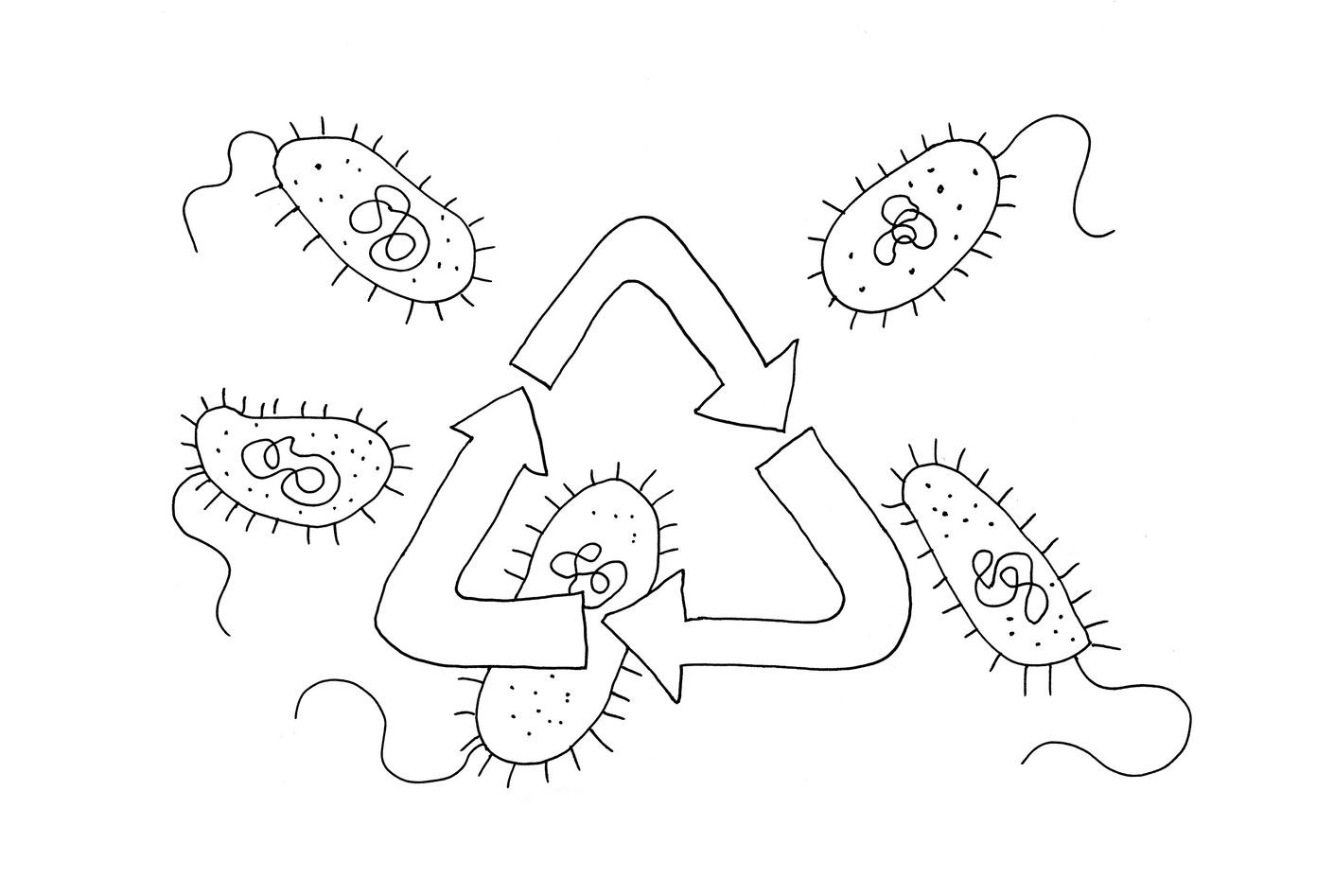
Knallgas bacteria can convert CO2 into valuable chemical building blocks—biodegradable plastics, for instance—with the help of hydrogen. Researchers at the catalaix WSS Research Centre in Aachen are now developing methods to exploit this ability, with the ultimate aim of creating a circular chemical industry that does entirely without fossil resources.
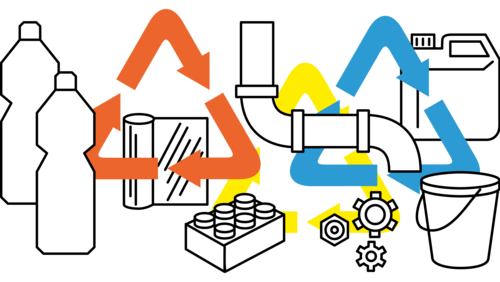
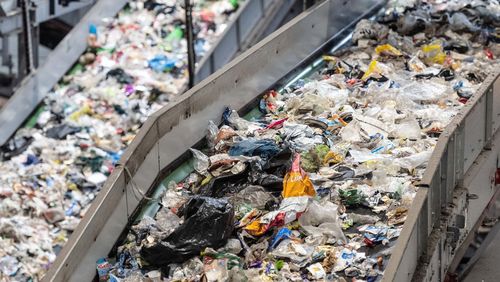
The teams at the catalaix WSS Research Centre have set themselves the ambitious aim of fundamentally changing the chemical industry by transforming it into a sustainable, multidimensional circular economy. Today, chemical products like plastics are generally produced from petroleum and other fossil fuels. Because they’re nearly impossible to break down and recycle, these products are either thrown away or incinerated at the end of their life cycle.
To change this, the catalaix researchers at RWTH Aachen University are developing innovative, catalysis-driven methods to extract high-quality, reusable chemical building blocks from plastics. Parallel to this work, they’re also seeking ways to produce new, sustainable and biodegradable plastics from renewable carbon and energy sources.
In this context, researchers in the group led by Lars Lauterbach, professor of synthetic microbiology at RWTH Aachen University, are pursuing a remarkable approach for using CO2-based biotechnology: they’re working with a group of fascinating microorganisms called Knallgas bacteria, which are a type of hydrogen-oxidising bacteria. Knallgas bacteria acquire energy when a mixture of hydrogen and oxygen combusts, producing water in a reaction known as the Knallgas reaction. Although the process as such is explosive, it unfolds in a controlled manner in the bacteria.
“Knallgas bacteria are small chemical factories: with the help of hydrogen, they convert CO2 directly into valuable molecules. If we channel these natural metabolic pathways into operable technical systems, we’ll be able to produce chemical building blocks and biodegradable plastics from carbon dioxide and renewable energies—entirely without fossil resources,” Lauterbach says.
CO2 fixation via hydrogen
A well-researched and highly promising Knallgas bacterium is Cupriavidus necator, a soil bacterium that uses the energy released during the Knallgas reaction for its metabolism. It can absorb CO2 from the atmosphere and convert it into organic compounds (biomass); when organic carbon sources like sugars or lipids are present, it can also process them. The most interesting feature, however, is the bacterium’s ability to store excess carbon in its cells in the form of polyhydroxybutyrate (PHB), a biodegradable plastic.
“This means C. necator has two excellent capabilities,” says Meryem Bahceli, PhD student in Lauterbach’s research group. “First, it fixes CO2 with hydrogen. When green hydrogen—that is, hydrogen produced from renewable energy sources—is used, the bacterium converts CO2 from the atmosphere into chemical products. Second, with the help of C. necator, we can produce biodegradable plastics directly from CO2.”
This latter capacity is the long-term goal of Lauterbach’s research group, which is adopting several approaches to achieve the aim. One fairly straightforward method involves cultivating C. necator to produce the biopolymer PHB and its derivatives. Bahceli says a Japanese firm is currently using this method to fabricate items like disposable toothbrushes. However, she continues, that process employs organic carbon sources such as sugars and fats as nutrients, which is less interesting from a sustainability point of view than when the bacterium is “fed” with the greenhouse gas CO2.
Bacteria chock full of biopolymers
To improve the methods for cultivating the bacteria, the catalaix researchers are investigating various different pathways that involve a process known as gas fermentation. In a recent publication (1), they present a system in which C. necatorin a culture medium transitions rapidly from sugar-based nutrients to CO2 fixation in a step-by-step process.
PhD student Halima Aliyu Alhafiz is exploring how CO2-fed C. necator could be cultivated in a way that would enable the bacterium to maximise its PHB production. She says she has harvested a yield of roughly forty-two grams of cell dry weight per litre of culture medium. “Polyhydroxybutyrate makes up seventy-two percent of that amount. This means: under good conditions, most of the bacterium consists of the biopolymer.”
When cultivating Knallgas bacteria, safety is always an important concern. “Because we work with such small quantities in the lab—and always under a fume hood—the risk of explosion is minimal,” Aliyu Alhafiz says. “But as soon as production is scaled up, we need to introduce safety precautions.” In industrial plants, this work is therefore generally carried out under pressure, which is costly and requires strict safety regulations.
Safe cultivation systems
“In our approach, we’re trying to avoid the formation of an explosive headspace by supplying the gases via a membrane,” Aliyu Alhafiz explains. Another recent publication (2) documents their newly developed bioelectrochemical system with a proton exchange membrane electrolyser. When an electric current is passed through the system, oxygen is generated on one side of the membrane, hydrogen on the other. The hydrogen then diffuses directly into the culture medium, where it’s available to the bacteria as an energy source—a critical step that eliminates the need to supply the hydrogen in the form of a pressurised gas.
A second promising method for using C. necator discussed in the paper involves genetically modifying the bacterium so that it produces substances other than PHB. Using the electrolysis system described above, the researchers selected a bacterial strain that produces isopropanol (IPA), a highly valued industrial alcohol employed as a solvent, a disinfectant and an intermediate for processing plastics.
“Knallgas bacteria are small chemical factories: with the
help of hydrogen, they convert CO2 directly into valuable
molecules.”
Lars Lauterbach
Mixed culture for chemical diversity
This ability to produce a wide variety of chemicals is essential for creating a sustainable circular chemical industry. “It would be impossible to achieve a sustainable future with just one single biopolymer,” Meryem Bahceli says. In her PhD thesis, she’s exploring yet another way to implement the approach: using mixed cultures in which biopolymers are formed in a step-by-step process via the coupling of various microorganisms. For the proof of concept, she worked with the bacterium Bacillus subtilis in addition to C. necator.
In an initial step, the Knallgas bacterium produces a metabolite from CO2 and hydrogen, then releases the substance into the culture medium. In Bahceli’s experiments, the substance is pyruvate, an important metabolic product. In the second step, B. subtilis uses the pyruvate to produce γ-polyglutamic acid (γ-PGA), a biopolymer that can be used in cosmetics, food products and medical applications.
“The biggest challenge is stabilising the mixed culture so that neither of the two bacterial strains outcompetes the other,” Bahceli says. Her basic idea is to develop a modular system. For instance, genetically modified strains of B. subtilis can be created that then produce different types of biopolymers or bio-components. “Depending on which second organism is selected, a different end product is the result.”
Enzymes regenerate cofactor
Yet another avenue being explored by the catalaix researchers is an approach for extracting and utilising enzymes that enable hydrogen utilisation from the Knallgas bacterium and then integrating these enzymes—called hydrogenases—in other chemical processes. In a third study (3), the research group applied this approach to valorise aromatic compounds of lignin, a natural biopolymer and common by-product of the paper industry.
In the experiment, enzymes from different types of bacteria were used to enable the conversion of lignin derivatives. To retain their effectiveness, however, these enzymes rely on certain cofactors to enable electron transfer during the reaction. Such cofactors are often expensive—and they themselves must be regenerated via electron transfer after the reaction is complete. For this regeneration step, the researchers are employing a hydrogenase extracted from C. necator: the hydrogenase utilises hydrogen, which has been produced via water electrolysis, to restore the cofactor to its energy-rich form after each cycle, enabling it to activate the enzymes for converting lignin.
Most of us have never heard of these seemingly unremarkable Knallgas bacteria. But the tiny organisms possess fascinating survival strategies. What’s more, they have capabilities that could prove instrumental in safeguarding the future of the entire planet. Capabilities that the researchers led by Lars Lauterbach are studying in minute detail—all in the interest of creating a more sustainable chemical industry.
Text: Simon Koechlin
Translation: Mary Carozza