

A bird’s-eye view of the plastics industry
Catalysis-driven recycling isn’t a viable option for every type of plastic waste. Identifying potential areas of application for the chemical conversion of polymers is the job of the systems analysis group led by Grit Walther at the WSS Research Centre “catalaix”.
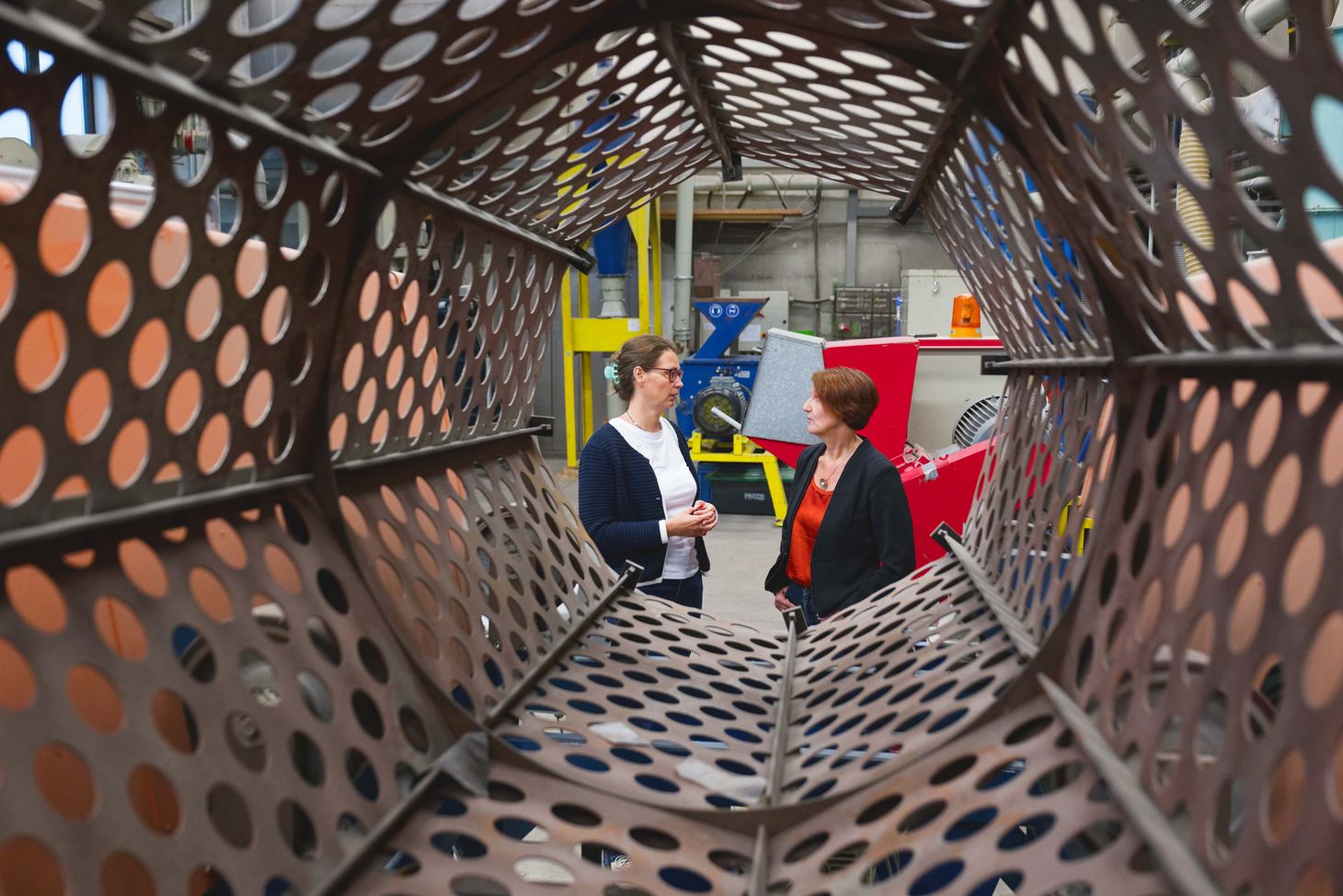
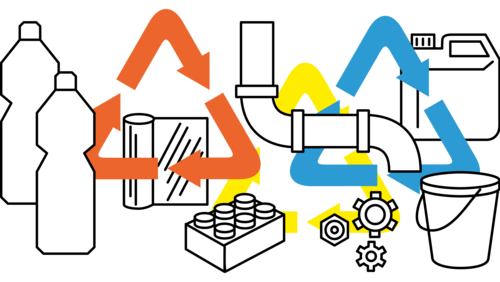
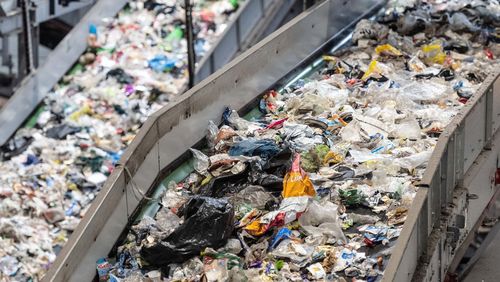
The world of plastics is diverse—and somewhat bewildering. Hundreds of different plastics are used in thousands of applications to produce millions of products. Unsurprisingly, this superabundance makes it difficult to track disposal and recycling processes for plastics when they reach the end of their life cycle. Analysing and modelling such waste and recycling streams is the remit of the systems analysis group at the WSS Research Centre “catalaix”.
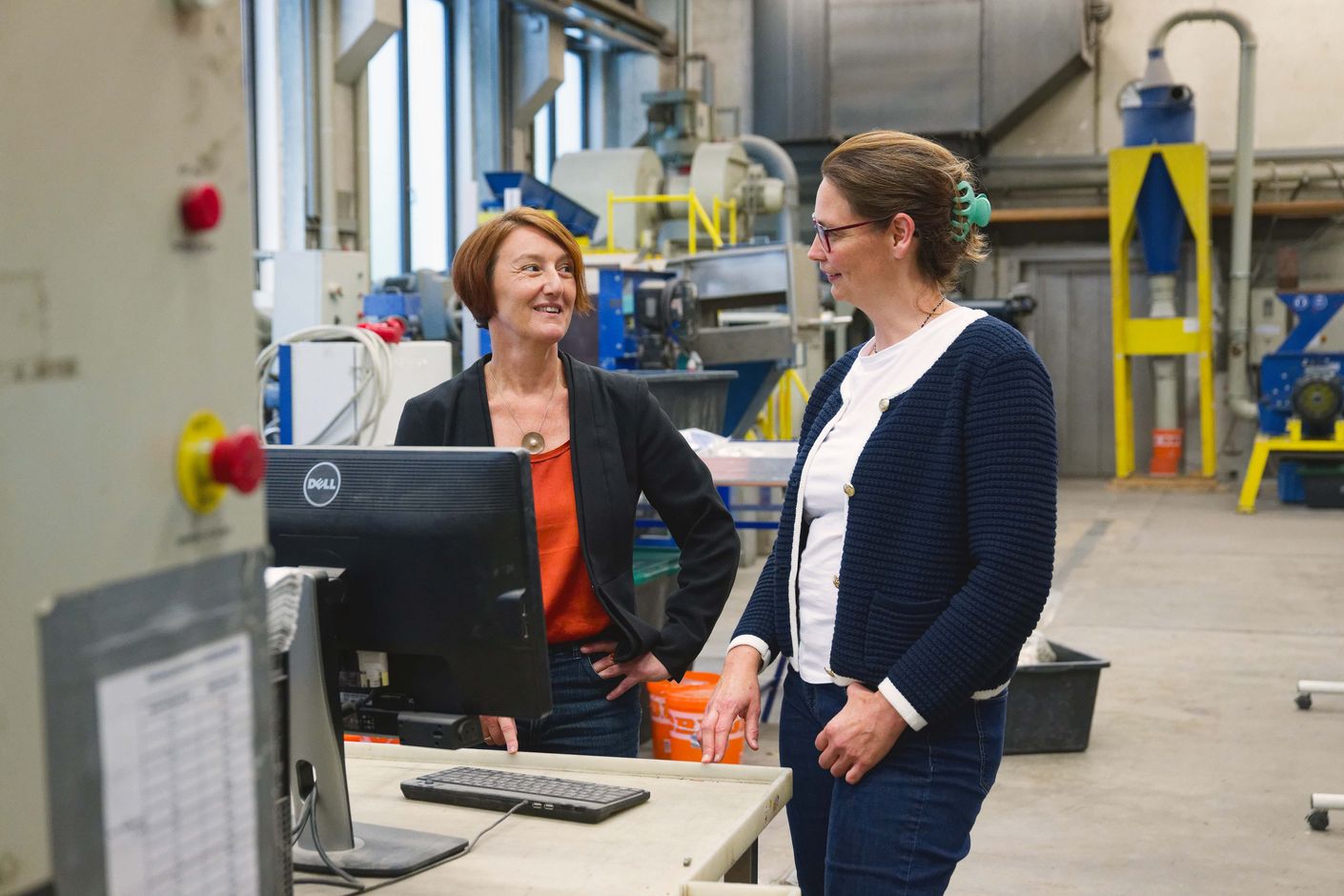
Grit Walther, Chair of Operations Management at RWTH Aachen University and part of catalaix’s five-member core team, leads the system analysis group. “You could say we’re the early warning or transparency system at the research centre,” is how she explains the group’s work. “Our job is to create an overview of the challenges in the plastics industry across the entire value chain—and then make the findings available to our colleagues in the chemistry-based parts of the project.” The knowledge her group generates is essential for determining which recycling technologies are viable and which research strategies are economically robust.
The group’s first step is to gain an overall view of the systems currently used for plastics recycling. As part of this work, the researchers conducted material flow analyses in the German state of North Rhine-Westphalia, using statistical data from the industrial, automotive, construction and packaging sectors to study how much plastic flows into these processing industries—and how much of the material is incinerated or recycled at the end of its life cycle. “We found that very little plastic material is being reintroduced into the cycle,” Grit Walther says.
Models and assessments
Conducting such material flow analyses is already an incredibly complex undertaking, especially given that plastics are traded on the global markets. However, these calculations are only the beginning. And so Walther and her team are building on this work to conduct technology and sustainability assessments. Which recycling technologies are promising for which types of plastics? What properties might characterise the value chain for a newly developed catalysis-driven process? How much energy and what resources are needed for industrial use of the process? Are new policy requirements necessary or anticipated? The answers to these questions are of great interest to the chemists in the catalaix team.
These more comprehensive assessments are next-level complicated, as Grit Walther explains: “We have to consider all the different layers at play—from the global to the molecular.” For instance, the global price of oil directly influences the economic viability of recycling plastics. At the same time, the feasibility of a planned catalysis-driven process depends not only on the specific type of plastic in question, but also on the quality of the waste stream—whether the material is contaminated, for example, or whether it contains problematic additives.
Grit Walther and her team modelled this scenario on the example of expanded polystyrene (EPS). EPS has excellent insulating properties: developed in the mid-1900s, the material has been used ever since for insulating flooring, roofs, walls and façades. Grit Walther says the durability of EPS means it has a particularly long life cycle: “That’s why it’s only now, with the renovation or demolition of older houses, that we’re confronted with the problem of how to dispose of it.”
A complex material stream
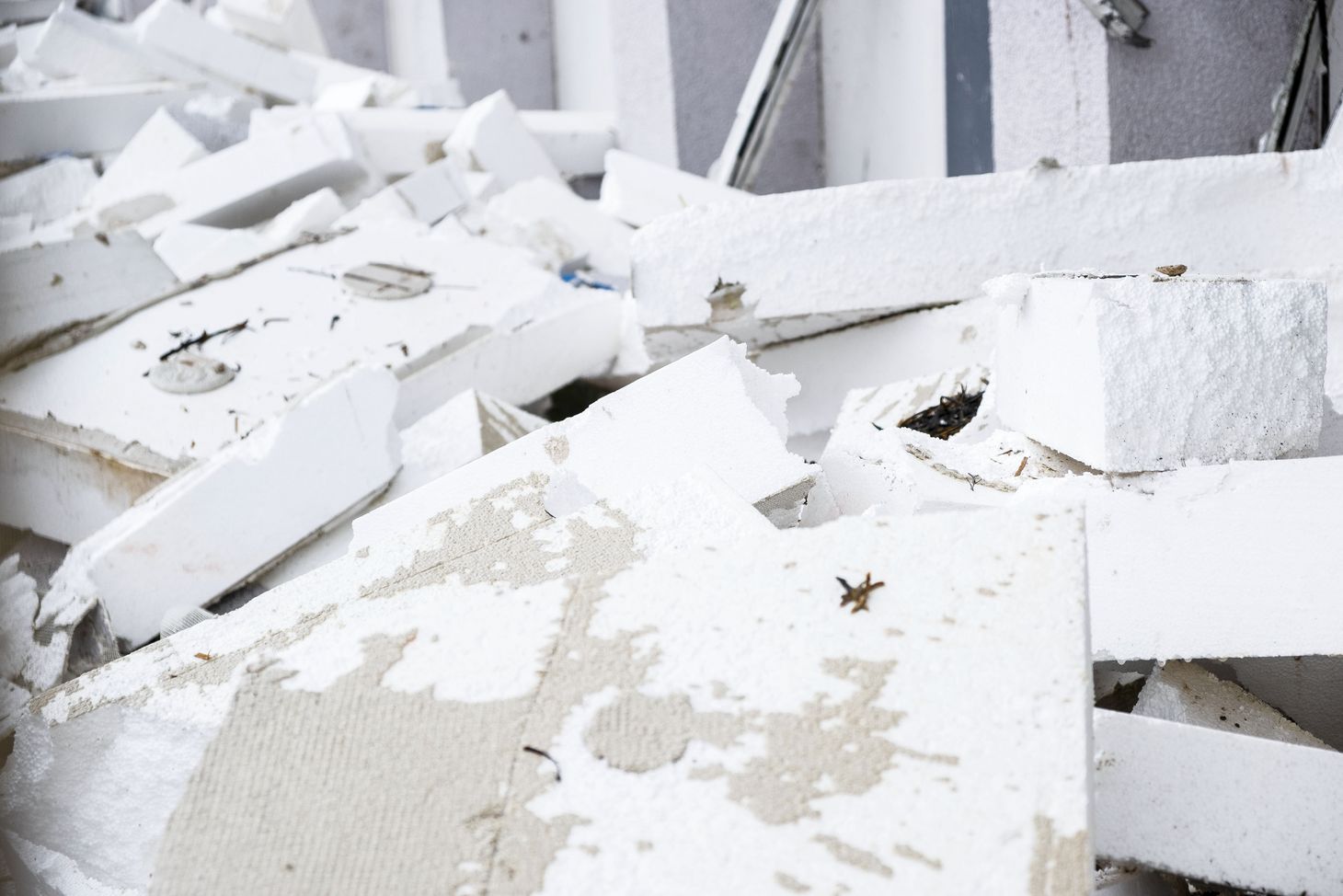
Currently, old EPS from composite heat insulation systems is generally incinerated. “The problem is that waste management facilities in Germany have limited capacity for processing the material—due to its very high energy density, EPS is often not accepted, as its combustion would exceed operational energy balance limits and may cause technical challenges,” Walther explains. Bottlenecks are therefore inevitable. A study led by Julia Schleier, one of Walther’s PhD students, concluded that, in 2040, some three hundred thousand metric tons of EPS used in composite heat insulation systems will be thrown out in Germany—roughly ten times more than in 2020.
It’s tempting to see waste EPS as an ideal candidate for a circular recycling solution. Unfortunately, however, the situation is less straightforward than it might seem: EPS stemming from composite heat insulation systems represents a “complex material stream”, as Grit Walther describes it. Older EPS insulation panels may contain brominated flame retardants (no longer permitted in today’s construction industry), which must be removed before further processing. And the material is otherwise replete with impurities: when EPS layers are peeled off façades, pieces of rendering and plaster tend to stick to the foam, making mechanical recycling difficult.
What’s more, EPS is extremely lightweight but nonetheless has a large volume, and the material accumulates in uneven amounts on construction sites throughout Germany. “It’s really a logistical nightmare, because no one wants to pay to transport truckloads of air over hundreds of kilometres,” Grit Walther explains. To make the process more cost-effective—and to ensure the input streams have the necessary purity levels—pre-processing is vital. Specifically: before the insulation panels are sent to a recycling plant, they must be cleansed of all rendering and plaster, then compressed into dense, transport-friendly blocks.
Incinerate or dissolve?
In the next step, Walther and Schleier modelled the ideal structure of a functional recycling network that includes a pre-processing phase. For this, they considered two promising recycling methods that had previously undergone technical analysis and testing in pilot facilities. The first method is pyrolysis, whereby the EPS is heated in an oxygen-free environment until it breaks down into its individual components. The second method uses solvents to dissolve the material, which is then purified.
Pyrolysis methods currently applied in industry yield only a comparatively small amount of high quality material. By contrast, solvent-based recycling can achieve markedly better results, and it has the additional advantage that the components of brominated flame retardants are separated out during the process.
However, because pyrolysis is a much less specific procedure, it can also be used to recycle other material streams—meaning a pyrolysis-based network is projected to be less expensive. Indeed, the researchers calculated that a solvent-based method would only be economically viable if more than fifty percent of all waste EPS from composite heat insulation systems was brought to these types of facilities.
Location model for Germany
The researchers developed a location model for a nationwide recycling network that, from a systemic point of view, would be able to process the anticipated EPS waste streams stemming from composite heat insulation systems. To predict which treatment processes would be necessary, they considered parameters such as the age and expected lifespan of buildings in certain regions, while also incorporating the cost of various transportation routes into their calculations. The result is a model for the year 2040 at the latest that encompasses numerous pre-processing plants and envisions a network of recycling facilities at several locations. To be sure, the researchers believe the associated costs would be considerable—without additional policy incentives, the installation of the recycling network would be economically challenging.
As a rule, the further a model projects into the future, the greater the uncertainty. To offset these variables, the researchers conducted an analysis to identify the most unpredictable aspects in the system. The results revealed that several of the most problematic areas are related to public policy. These include questions concerning whether recycling EPS from composite heat insulation systems will be required by law, whether new building insulation standards will be introduced, and whether pyrolysis will be officially recognised as a form of material recycling. The answers to these questions are critical for determining how and when a recycling network can become functional and profitable.
Seeking the best areas of application
The markets represent another wildcard, as do technological developments. The latter, however, could also harbour opportunities—and this is where the interdisciplinary work at the WSS Research Centre “catalaix” comes into play. Indeed, it’s entirely possible that researchers will come up with other, more efficient ideas for recycling materials like EPS. Or they might develop methods that could suddenly transform a recycling network into a profitable business model.
These kinds of ideas are currently the subject of intense debate within the catalaix team, as Grit Walther relates. “It remains to be seen whether we’ll conclude that seeking a catalysis-driven solution for recycling EPS is particularly promising. Together, we’re searching across the entire spectrum for application areas in which the systems analysis group has identified materials that haven’t yet been targeted for recycling but that will accumulate in large quantities in the future.”
In many ways, Grit Walther and her colleagues in the systems analysis group act as a compass, enabling the chemists in the catalaix project to navigate their way through the jungle of plastic materials.