


A new record in laser incisions
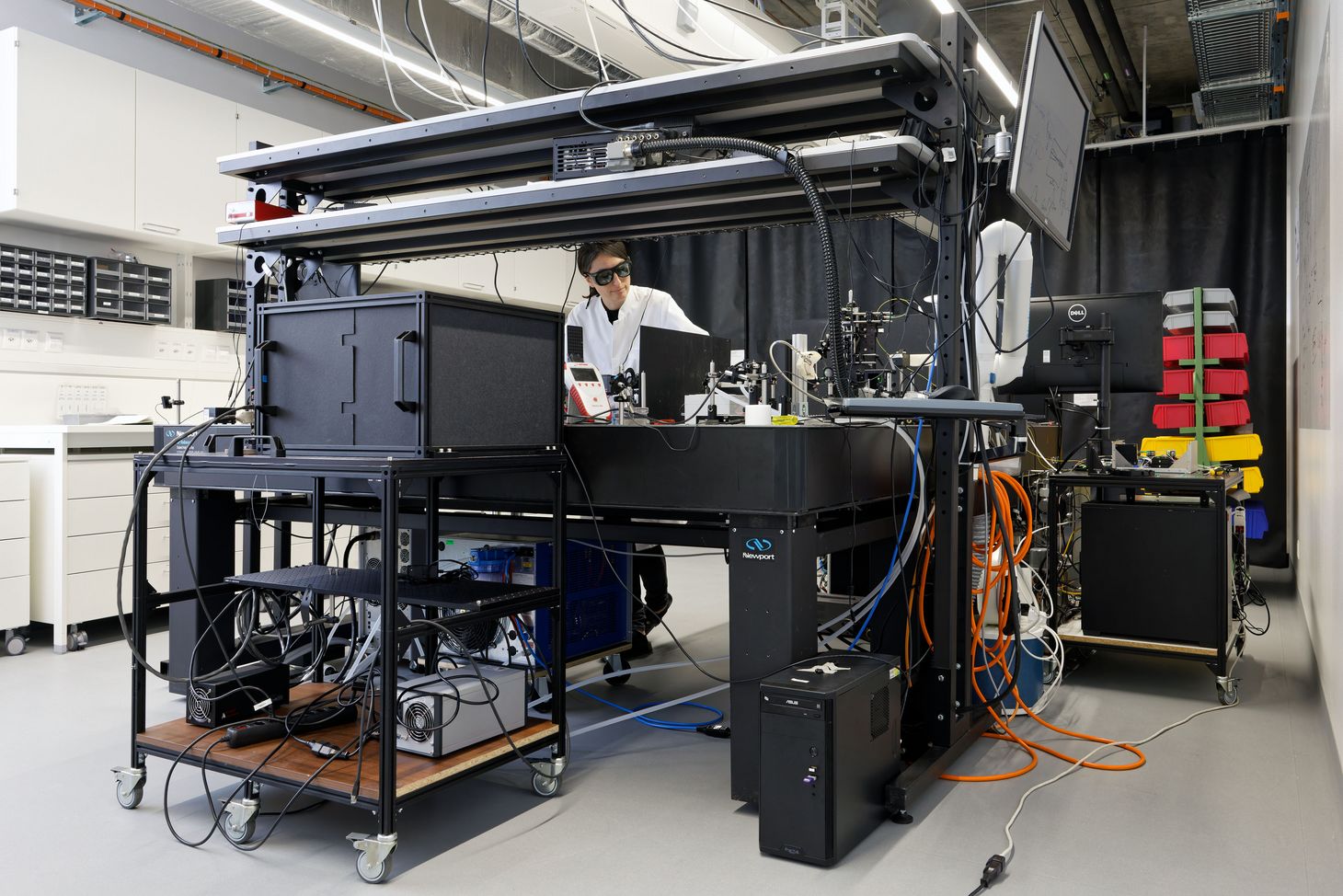
Researchers in the MIRACLE II project at the University of Basel are engineering a laser robot capable of cutting bone tissue with extreme precision. Recently, the group led by Ferda Canbaz took a significant step towards realising this vision—they developed a new laser method that can cut bone to a record depth of 4.4 centimetres.
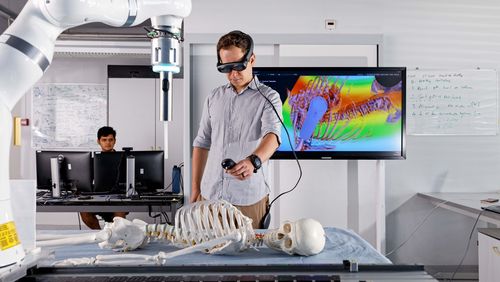
Orthopaedic surgeons still rely on mechanical tools like saws and drills in the operating theatre. But now, if the researchers in the WSS-funded MIRACLE II project at the University of Basel are successful, lasers will one day be added to the surgical repertoire. “Sawing and drilling generates a lot of heat due to friction, which in turn can cause irreversible damage to the surrounding tissue,” says Ferda Canbaz, group leader in the MIRACLE II project and head of the Center for Intelligent Optics at the University of Basel’s Department of Biomedical Engineering (DBE).
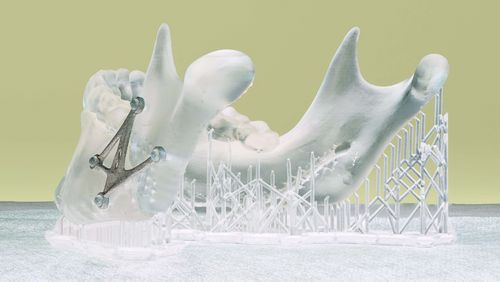
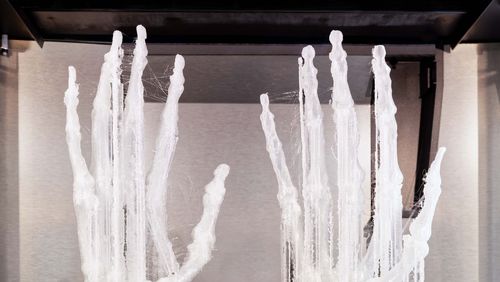
Lasers, by contrast, exert no mechanical pressure, making them less harsh on the surrounding tissue and reducing the risk of microcracks forming in the bone. And because lasers are extremely flexible and precise, they’re ideal for cutting a wide variety of shapes and sizes out of a bone—into which surgeons can then place the made-to-measure, 3D-printed implants that are also being developed in the MIRACLE II project.
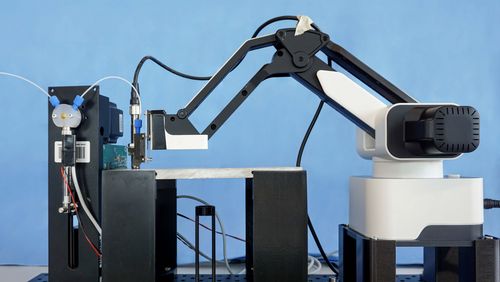
At present, lasers are chiefly used for surgery on soft tissue—in skin treatments, for example, or eye operations. When it comes to cutting bone, however, the technology has certain limitations, including the fact that conventional lasers can cut only to a depth of two to three centimetres. While sufficient for maxillofacial surgeries—such as those performed by the CARLO laser robot developed by a DBE spin-off company—these depths are simply too shallow for common surgeries like knee and hip replacements.
New energy distribution
Now, however, Canbaz and her team have found a way to significantly increase the cutting depth of lasers, and a recently published article in “Scientific Reports” (*) demonstrates their innovative method for achieving incision depths of up to 4.4 centimetres. While it might seem logical to simply boost the laser beam’s energy, Canbaz says that would be unwise: “If the laser is too powerful, the bone starts to char—and healing is impaired.”
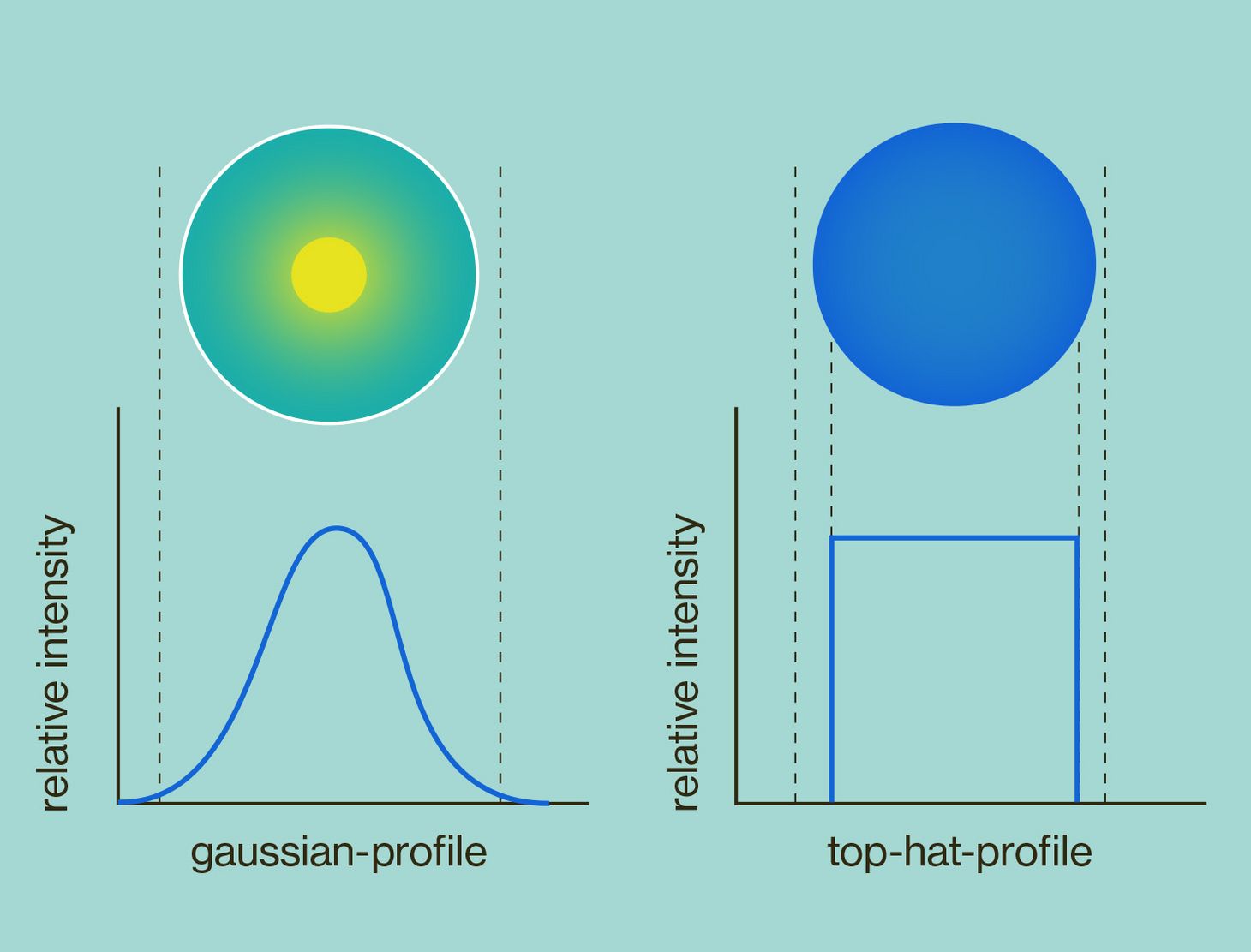
Instead, the researchers decided to rearrange the energy distribution in a laser beam. A cross-sectional view of a conventional laser beam shows a profile that’s strongest in the middle and that diffuses towards the edges, much like the “cone” of light from a torch. Seen in profile, the light intensity forms a so-called “Gaussian curve” with a rounded peak in the centre, as in a bell curve. The deeper a laser with this type of profile cuts into a bone, the more energy is absorbed by the walls at the incision site—until the laser lacks the power to cut away any more tissue.
For their experiment, the researchers designed a laser with a consistent distribution of energy across its entire surface up to the edges, where it drops abruptly. The cross-sectional profile of such a distribution resembles a top hat, hence the name “top hat” profile. The advantage of the even distribution of energy is that the laser can cut more quickly and efficiently—and penetrate deeper into bone tissue.
A new record
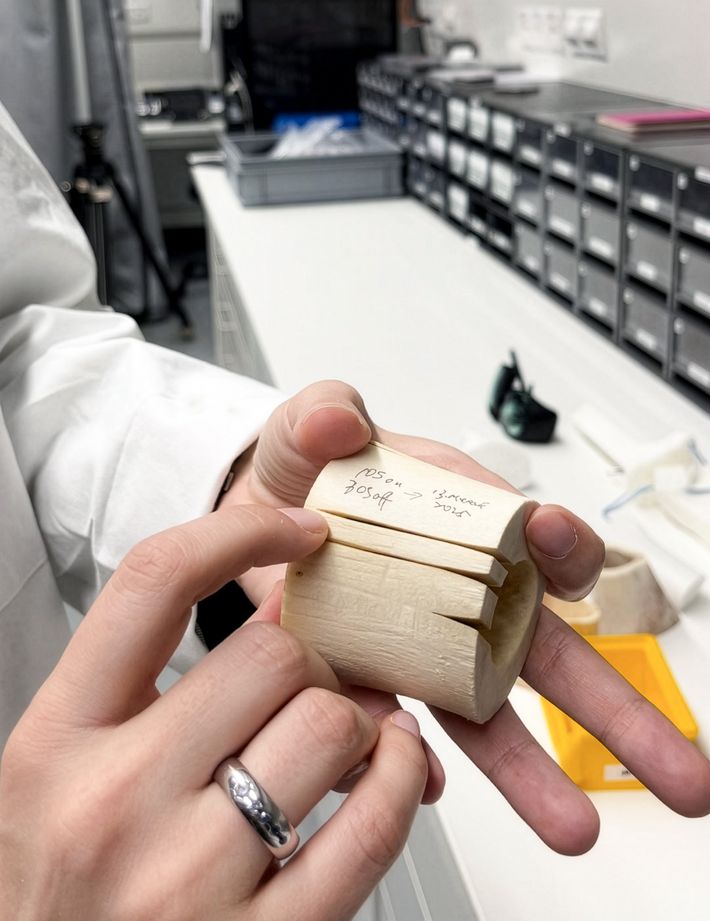
The team then tested both laser profiles on bovine bones under identical conditions. To prevent thermal damage and ensure the incision area remained accessible, the bones were continuously cleaned and cooled with compressed air and water. The experiments showed that the top-hat method performed better, achieving a depth of 4.4 centimetres compared to 2.6 centimetres with the Gaussian distribution.
Canbaz says the results were even better than expected, especially as the beam quality of the top-hat laser was only half as good as that of the selected Gaussian laser. “Given these conditions, the top-hat laser should have cut only half as deep,” she explains. “But it actually cut twice as deep—so we achieved almost a fourfold improvement.”
The result has convinced Canbaz that the incision depth can be further increased, making the method theoretically viable for nearly all types of bone surgery. When it comes to knee replacements, for instance, surgeons must cut roughly seven centimetres into bone. “We should be able to achieve these depths,” Canbaz says.
Quicker cuts
Incision depth is, however, just one aspect to consider. Canbaz says that a more difficult—and scientifically more interesting—problem is optimising incision speed. Laser bone cutters are still significantly slower than mechanical tools made of metal. The top-hat laser can cut through some 0.4 cubic millimetres of material per second. While this is nearly twice as fast as the Gaussian laser, it’s still more than twenty times slower than a standard bone cutter used in knee replacement surgery.
“We obviously need to boost the laser’s cutting speed many times over,” Canbaz says, adding that it won’t be easy. “But we’re working on it. We already have several ideas about how to best solve the problem.” In addition to addressing the issue of speed, the team’s next steps also include adapting the laser-cutting system from ex vivo bovine bones to the complexities of the living human body.
Measuring tissue and distances
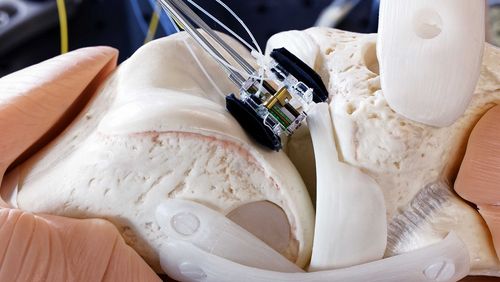
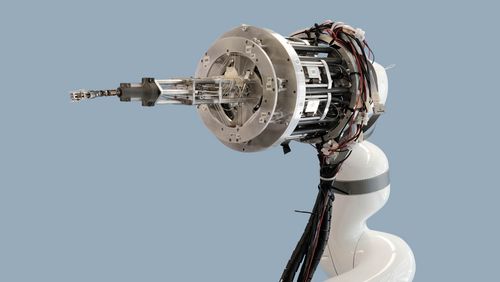
The MIRACLE II researchers also have several other obstacles to overcome. For example, they must devise a method for introducing the laser optics for minimally invasive surgery into the body via a miniaturised robotic tip. Another aspect concerns the necessary control and safety mechanisms. “The laser we tested cuts through everything in its path,” Canbaz says. “But the MIRACLE sensor needs measurement and feedback systems.” After all, in a real-life setting, the laser must cut only at the designated site and only to the designated depth in order to avoid damaging the surrounding tissue.
There’s still quite a bit of work to be done before the researchers can achieve their aims. But Ferda Canbaz and the entire MIRACLE II team are convinced that personalised surgical interventions are the future. Personalised 3D-printed implants will be fabricated in an infinite number of shapes—and to prepare a bone for placing these made-to-measure implants, surgeons need precise and minimally invasive cutting tools. “Standard bone saws are simply not able to cut all the various shapes,” Canbaz says. “The only option I see is laser technology.”
(*) Link to study