

World-class cancer research
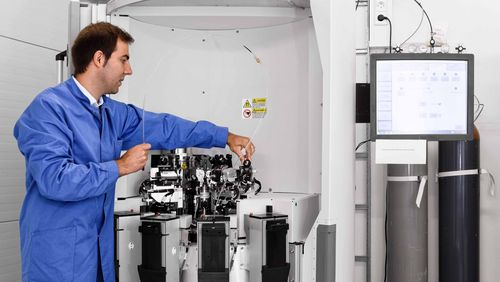
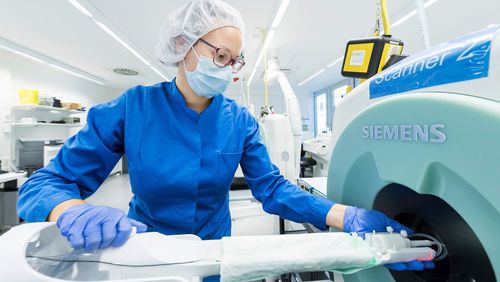
The Werner Siemens Imaging Center (WSIC) has achieved yet another significant milestone by securing an additional seven-year grant as one of the leading institutions in the iFIT Cluster of Excellence. This funding further strengthens Tübingen’s status as a research hub for medical imaging in tumour therapies.
In August 2024, the Image-Guided and Functionally Instructed Tumor Therapies (iFIT) Cluster of Excellence submitted a dense, one-hundred-and-forty-five-page project proposal to the German Research Foundation for the 2026–2032 funding period. Bernd Pichler, head of the Werner Siemens Imaging Center (WSIC) and one of iFIT’s three spokespersons, says preparing and writing the complex proposal was extremely demanding.
It was also well worth the effort. On 22 May 2025, the Tübingen team received the answer they were waiting for: iFIT—the sole cluster of excellence for oncology in Germany—officially qualified for a second funding period and was awarded a seven-year grant of approximately fifty-four million euros. In addition to being delighted, Bernd Pichler is certain of one thing: “Without the long-term financing from the Werner Siemens Foundation, the iFIT programme wouldn’t exist. Our application was successful only because we first accumulated the necessary expertise at WSIC.”
Medical imaging as linchpin
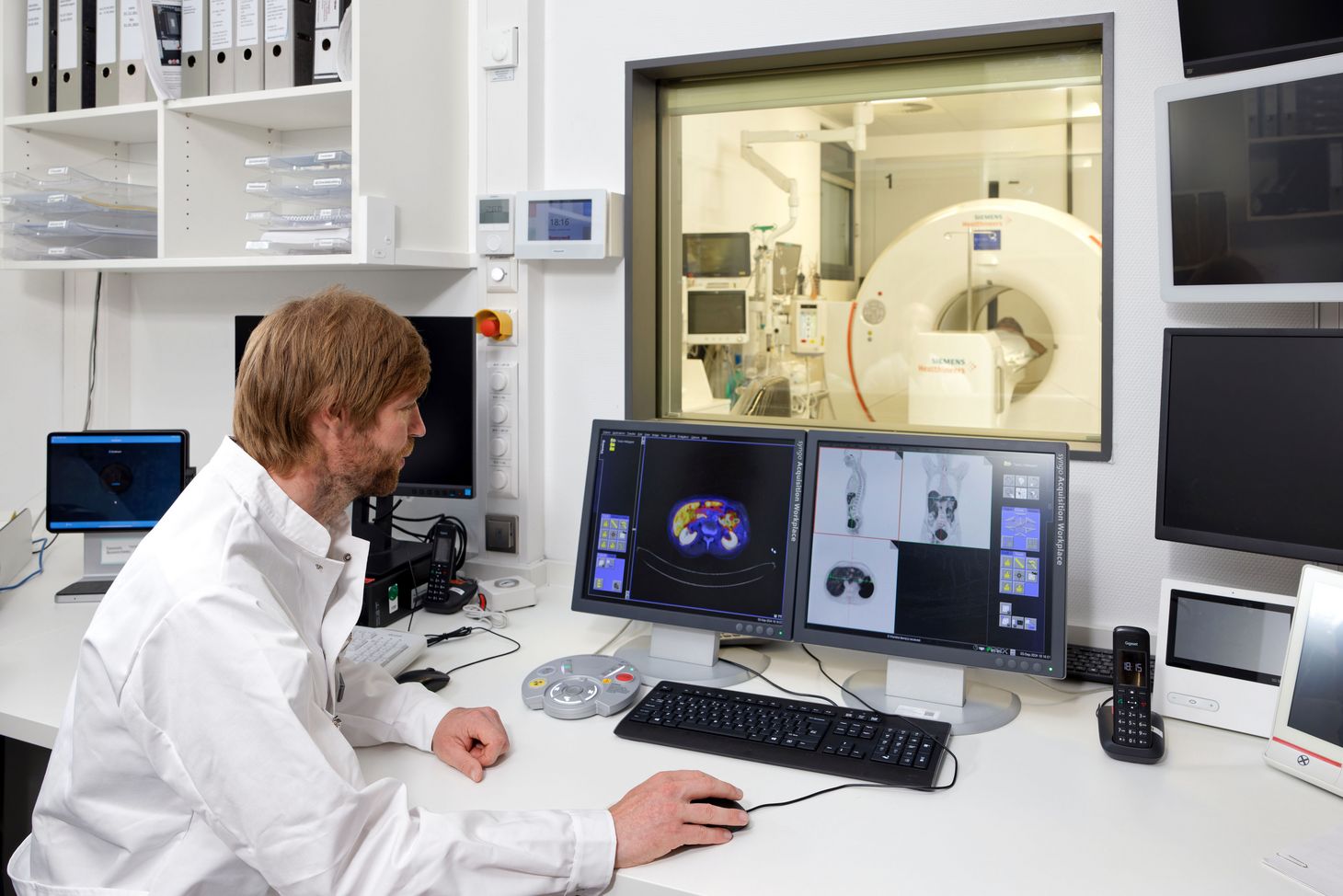
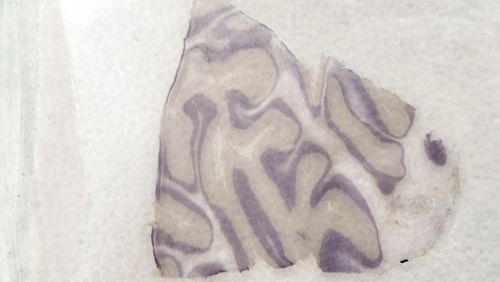
And in fact, the medical imaging techniques developed at WSIC are at the heart of the excellence cluster. Work at iFit focuses on researching and treating malignant solid tumours, which are cancerous growths that form in solid tissue rather than in the blood or lymphatic system. Most of these cancers are still incurable—roughly a third of all cases are first diagnosed when the disease has already progressed to an advanced stage—and unfortunately often only after the cancer has metastasised.
Research and therapy development at iFit comprise three core areas. The first involves seeking target structures for blocking tumours and developing molecular tumour therapies, while the second area focuses on how immunotherapies can be used to activate the body’s own immune system to neutralise tumour cells. The third area—WSIC’s contribution—is dedicated to developing cutting-edge medical imaging techniques to detect and visualise tumour signals.
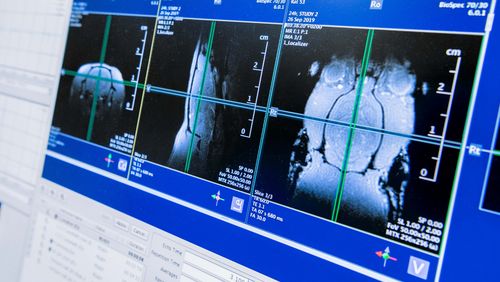
Bernd Pichler explains that medical imaging is the element uniting all three areas: “We use our methods to characterise key tumour-biological processes. We identify which therapy is best suited to the case at hand. And we monitor whether the chosen therapy is actually working—or if an alternative treatment should be considered.”
Fast track to clinical care
This three-pronged approach already proved extremely successful during iFit’s first funding period. Pichler says the panel of experts evaluating the proposal were particularly impressed by how quickly the excellence cluster was able to translate findings from the lab into clinical care. One innovation highlighted in the report was the new class of PET tracers developed under Pichler’s leadership.
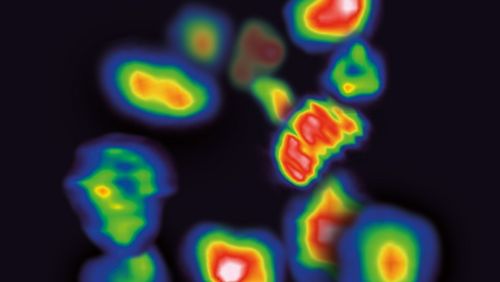
Tracers are substances with very low levels of radioactivity that are introduced into the body, where they take part in metabolic processes or bind themselves to structures on the cell surface. Their radioactive labelling is what renders them visible in medical imaging techniques such as positron emission tomography (PET).
The tracers developed in Bernd Pichler’s group detect tumour cells that are in a so-called senescent state: although they no longer divide, these cells are still alive and can trigger the growth of other tumour cells. Over the past seven years, Pichler and his team have developed a total of ten different such senescence tracers, one of which was proven safe in a Phase I clinical trial and is now being tested in a Phase II study.
Monitoring immunotherapies
Another example of the cutting-edge research conducted at WSIC is the centre’s unique medical imaging platform, which uses nanobodies to render specific immune cells visible. Radio-labelled nanobodies are PET tracers created on the basis of antibody fragments. The infinitesimally small tracers are able to penetrate even the tiniest, most delicate tissues and vessels, where they can be utilised for medical imaging. To date, the researchers have already developed nanobodies for six different immune cell targets. These can be used to detect resistance to immunotherapies—thus enabling an alternative course of treatment to be chosen as soon as possible.
Other successes from the excellence cluster’s first funding period include two small-molecule inhibitors, three antibodies and six peptide vaccine therapies, all of which have been successfully tested in humans. Yet further
testimony to iFIT’s high quality are the fifty patents filed and the four spin-off companies founded. In their report, the expert panel confirmed that the programme is at the vanguard of research excellence, thanks in large part to the groundbreaking work at the Werner Siemens Imaging Center.