

Dental filling with healing power
Tooth decay affects billions of people worldwide, and once the disease has reached an advanced stage, an invasive root canal treatment is often the only way to prevent tooth loss. Now, researchers at the University of Zurich are developing a dental cement that activates a tooth’s natural healing mechanisms. Project leader Isaac Bugueno has received a WSS-funded MedTech Entrepreneur Fellowship to drive the innovative undertaking forward.
Tooth decay—also known as dental caries—is one of the most common diseases in the world. According to the World Health Organization (WHO), some 2.5 billion people are affected by caries, which occurs when acids produced by bacteria dissolve the hard tissues of the teeth. In Europe, where diets are high in sugar, nearly everyone gets a cavity at some point in their life. If these small holes aren’t treated correctly at an early stage, increasingly deeper cavities will form.
When cavities are left untreated, the acids produced by bacteria will penetrate through the various layers of a tooth: first through the enamel, then the dentin and, in the worst cases, into the pulp—the soft, living tissue inside a tooth. Once this happens, tooth vitality is in danger, even if the cells in the pulp are still active.
To be sure, researchers have developed a dental cement filling—marketed as “Biodentine”—that releases calcium into a cavity, activating the tooth’s self-healing capacity at least to a certain extent. However, complications are common, and bacterial growth in the cavity often outpaces the healing process. In such cases, the only remaining option to save a tooth is a root canal treatment, a procedure in which a dentist removes the infected pulp, extracts the nerves and then fills the tooth with synthetic material. Although the tooth remains visually intact, from a biological standpoint it’s essentially dead.
Stimulating cell growth
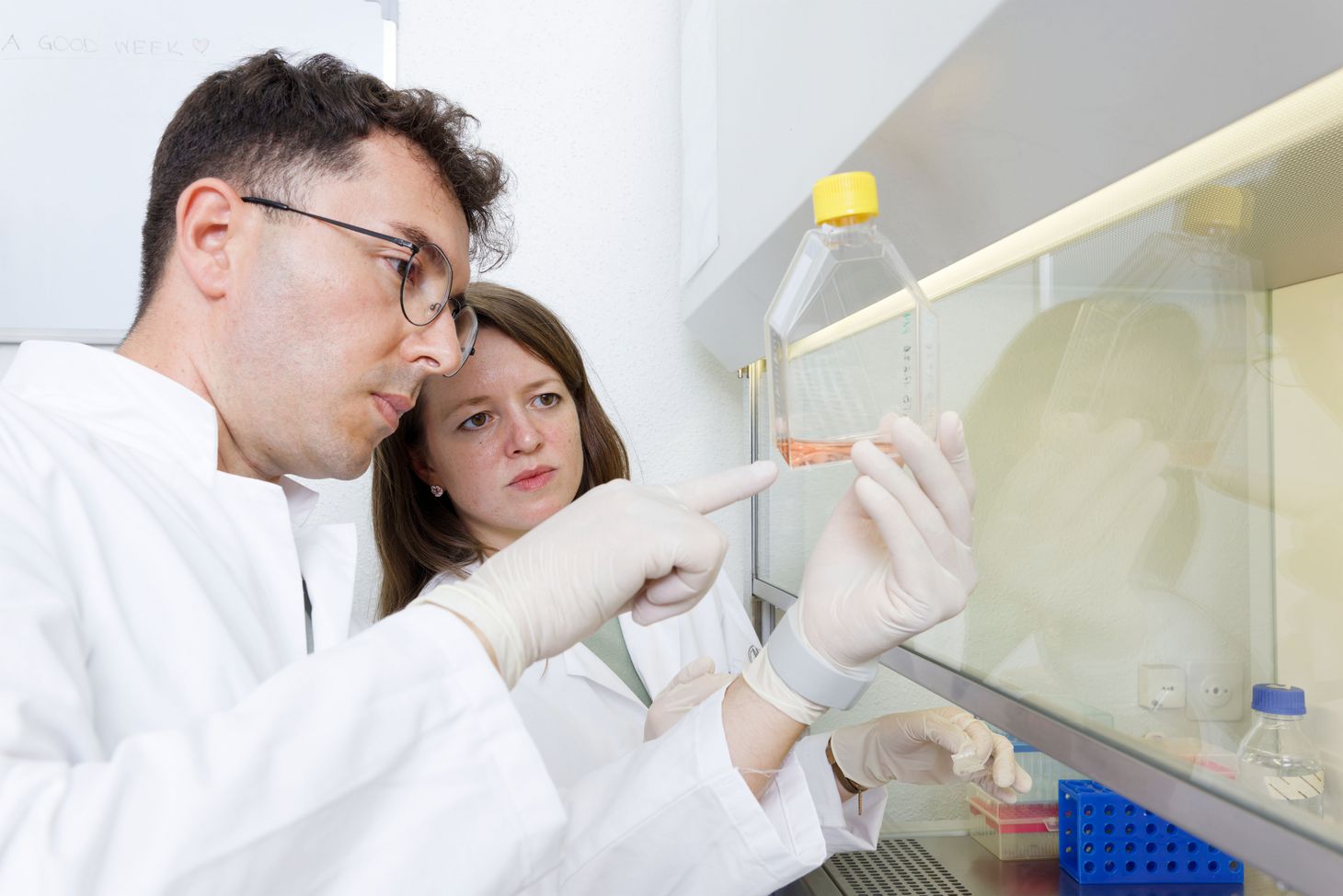
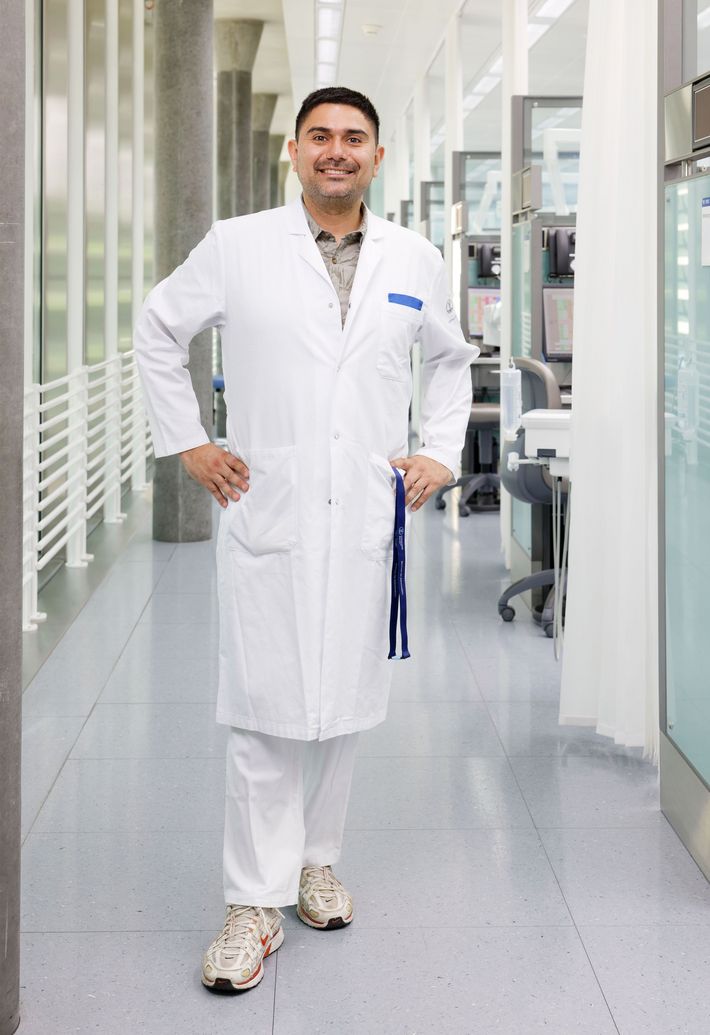
On the top floor of the University of Zurich Center for Dental Medicine, Privatdozent Isaac Bugueno and postdoctoral researcher Argyro Lamprou are developing MutaDent—a technology with the potential to revolutionise the treatment of dental caries. Bugueno and Lamprou co-founded the innovative project and are the key players in advancing the technology.
Bugueno leads a research group at the Institute of Oral Biology at the University of Zurich. In addition to this advantageous proximity, the project also benefits from collaborations as well as mentoring services offered through the Clinic of Masticatory Disorders and Dental Biomaterials at the University of Zurich, in particular with Professor Mutlu Özcan, and the collaboration with Professor Erick Carreira at the Department of Chemistry and Applied Biosciences at ETH Zurich.
The MutaDent founders have lofty goals: rather than merely replacing decayed tissue, they’re aiming to harness a tooth’s natural repair mechanisms. “We’re developing the world’s first dental cement that’s capable of supporting a damaged tooth’s innate physical, chemical and biological healing abilities,” Bugueno says. Specifically, MutaDent is designed to stimulate the formation of specialised cells—called odontoblasts—on the surface of the pulp. Odontoblasts are responsible for producing dentin, the hard substance beneath the enamel that makes up most of a tooth.
Bugueno compares MutaDent’s functioning to a multistage rocket launch. The first stage involves inserting a special dental cement directly into the damaged part of the tooth; the cement contains tiny particles whose origin and make-up must be kept secret during the ongoing patenting process. The dimensions of the small bioactive particles have been calculated so that they can travel far enough in the direction of the pulp to be effective, but without penetrating sensitive blood vessels or nerves—the second stage. The third stage begins when, after a certain amount of time has elapsed, the tiny particles begin to disintegrate, releasing extremely small biologically active molecules in the process.
These molecules are at the heart of the innovation. They have the ability to stimulate dental stem cells in the pulp into forming new odontoblasts, which then grow along extremely fine canals far into the dentin, where they build new dental tissue. “Our aim is to strengthen the body’s inherent regenerative abilities before irreversible damage occurs,” Lamprou says.
An accidental discovery
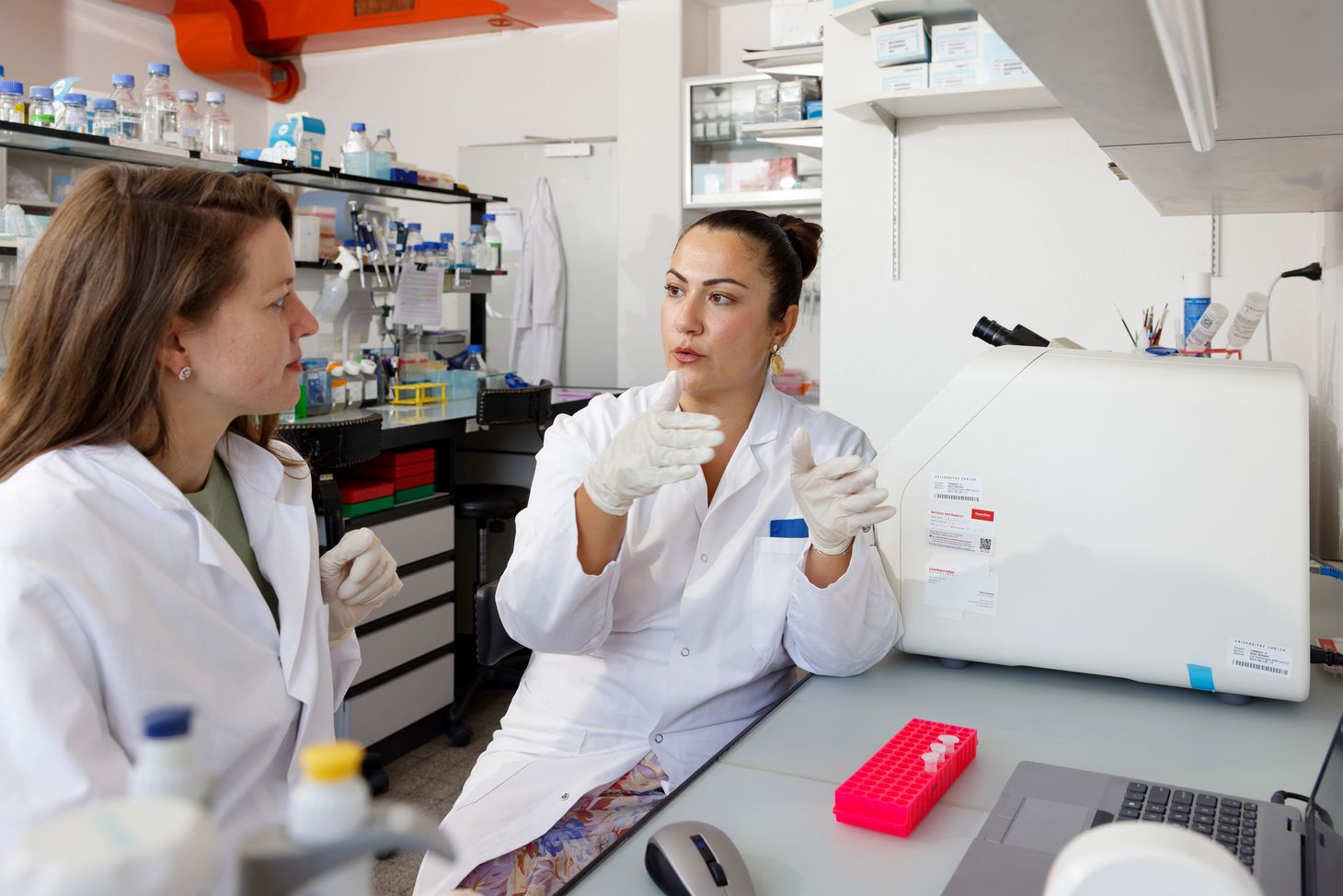
Bugueno says the discovery of the stem-cell-stimulating molecule was entirely by chance. The researchers had applied methods developed in the team led by Erick Carreira to enable the isolation and synthesis of small molecules derived from the human microbiome—the complex, natural microbial community present in the human body. Originally, the aim was to discover whether such substances have a toxic effect on cells in the pulp.
However, instead of identifying substances that kill cells, they found quite the opposite. “One day a PhD student came and said something unusual was happening in one of the samples,” Bugueno says. “At certain concentrations of one particular molecule, the pulp cells didn’t die—they actually replicated.” Put in simple terms, the substance appears to stimulate the stem cells into dividing and forming new tissue.
At present, the technology is still in the early stages of development. The researchers are focusing on optimising the material and better understanding the biological mechanisms. For instance, they want to identify the effects that are caused by the cement itself. Other questions concern how the pH can be controlled so that the sensitive biological substances remain active, and how the active agents can be released reliably and in the correct amounts.
From research to practice
The development of the new technology is supported by a University of Zurich MedTech Entrepreneur Fellowship that was awarded to Isaac Bugueno. The Werner Siemens Foundation funds the Fellowship programme, which was created to support early-career researchers in translating their findings into marketable products and services. Each Fellowship comprises a grant of 150,000 Swiss francs as well as access to state-of-the-art infrastructure, coaching, and networking opportunities.
“In addition to helping us drive the research forward, the Fellowship is enabling us to lay the business-related groundwork for later marketing a product,” Bugueno says. This includes filing for a patent, preparing regulatory aspects and planning future clinical trials. The Fellowship also creates the necessary conditions for bridging the gap between basic research and practical application—the leap that many promising technologies fail to make.
Dental model on a chip
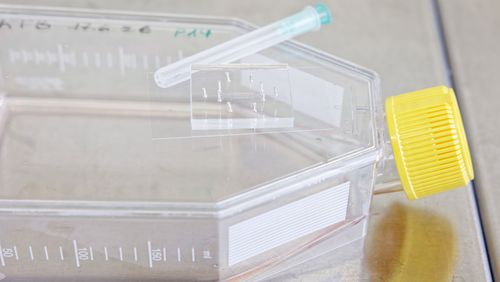
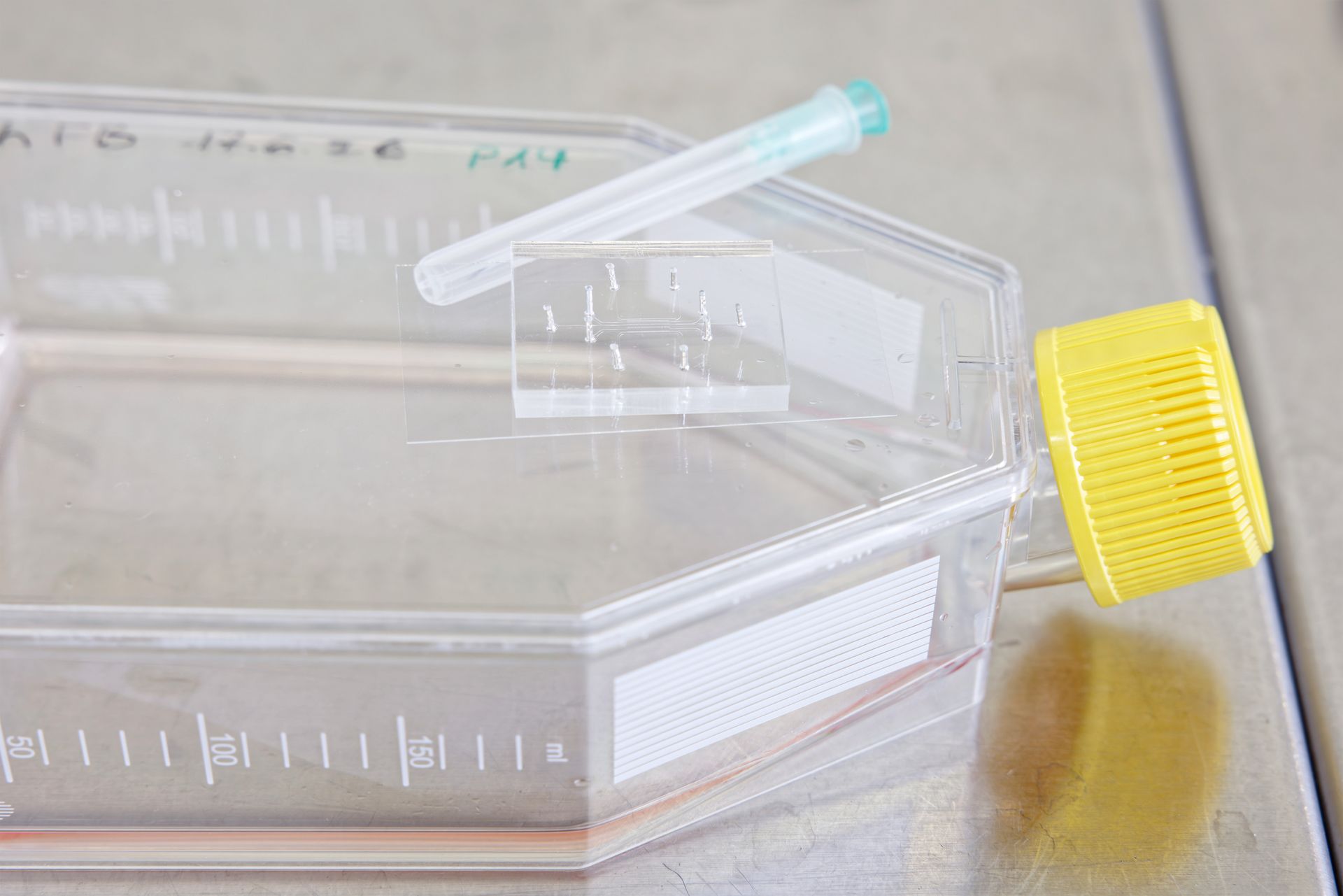
To conduct their experiments, the researchers draw on a wide range of test systems, including diseased human teeth that were removed from patients and donated to science, as well as artificial models. As an example of the latter, Bugueno and Lamprou point to the “Tooth-on-a-chip” systems in their lab—particularly complex, miniaturised models of teeth placed on a chip. The models contain all the key components of a real tooth, thus enabling near-authentic tests.
The lab even boasts a rotating device that simulates weightlessness. “At some point in time, we want to test whether dental cells grow more quickly in space—where there’s zero gravity,” Bugueno explains. Although such experiments lie in the future, the example shows how thoroughly the researchers are exploring the various possible ways to enable dental regeneration.
Simple idea, huge potential
It will likely be several years before patients can benefit from the technology. First, more lab tests are needed, followed by animal experiments and clinical trials with humans. But the researchers believe their solution is highly interesting—not least because caries treatment is a growing line of business. “Biodentine is one of the leading products in this area, and its manufacturer, Septodont, has announced the ambition of reaching a billion euros in revenue by 2032,” Isaac Bugueno says.
Both researchers agree that the best part of MutaDent is its radical simplicity. “We’ve intentionally chosen to work with a cement that’s similar to current materials, as dentists will want to integrate our product seamlessly into their existing treatments,” Argyro Lamprou explains. And Isaac Bugueno adds: “We’re essentially adding just one single substance to the cement—one that triggers a tooth’s natural regeneration capacities.”
The MutaDent approach has the potential to fundamentally alter the treatment of advanced caries. Instead of removing tissue and replacing it with a synthetic filling, future dental therapies could mobilise a tooth’s natural ability to heal itself.
Text: Simon Koechlin
Translation: Mary Carozza