

A crowd pleaser
Last year, MIRACLE II made a powerful impact with its successful appearance at the World Expo in Japan. Now, after returning to their labs at the University of Basel, the researchers are already engineering new wonders.
In addition to being at the vanguard of med-tech research, the MIRACLE II project is also breaking new ground in public outreach. The project financed by the Werner Siemens Foundation (WSS) is developing a robot-guided laser scalpel for minimally invasive bone surgery—and the participating researchers are increasingly making their work known to a wider population. Project leader Philippe Cattin, Professor of Image-Guided Therapy and Head of the Department of Biomedical Engineering (DBE) at the University of Basel, says: “We place great store in showing people what we’re developing in our research labs.”
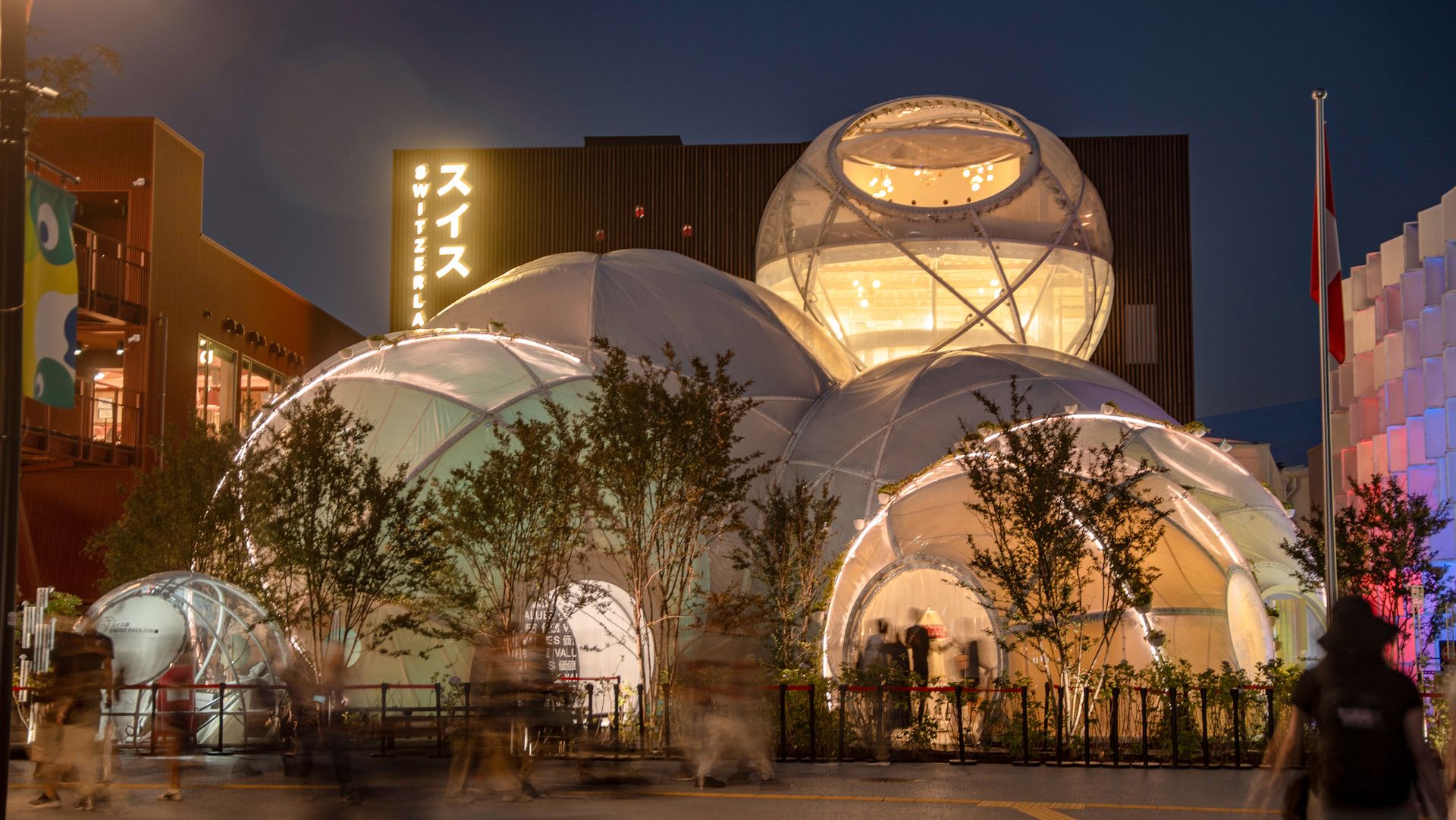
Indeed, MIRACLE II’s public outreach activities opened the door to entirely new experiences last year. The absolute highlight was their participation in the 2025 World Expo held in Osaka, Japan: as one of a select few Swiss research projects, MIRACLE II was invited to present in the LIFE exhibition at the Swiss Pavilion, where the project’s pioneering technology was on display from mid-June to mid-August.
Compact display
The official requirements for participating projects were both simple and challenging, in particular regarding size. Presentations had to fit in a booth consisting of a maximum three-section USM Haller unit, with a width of just a little less than two metres. The MIRACLE II researchers mastered the challenge with aplomb, managing to squeeze almost every aspect of their project into the limited space, including their virtual reality experience, 3D-printed implants, endoscopic robot and laser systems.
Every day, some eight thousand visitors stopped by the MIRACLE II stand at the Swiss Pavilion to marvel at the various innovations, including skull implants that were fabricated by Florian Thieringer’s research group in the University Hospital Basel’s in-house 3D printing lab. They could also peer into a skull using the innovative virtual reality system designed by Philippe Cattin’s team.
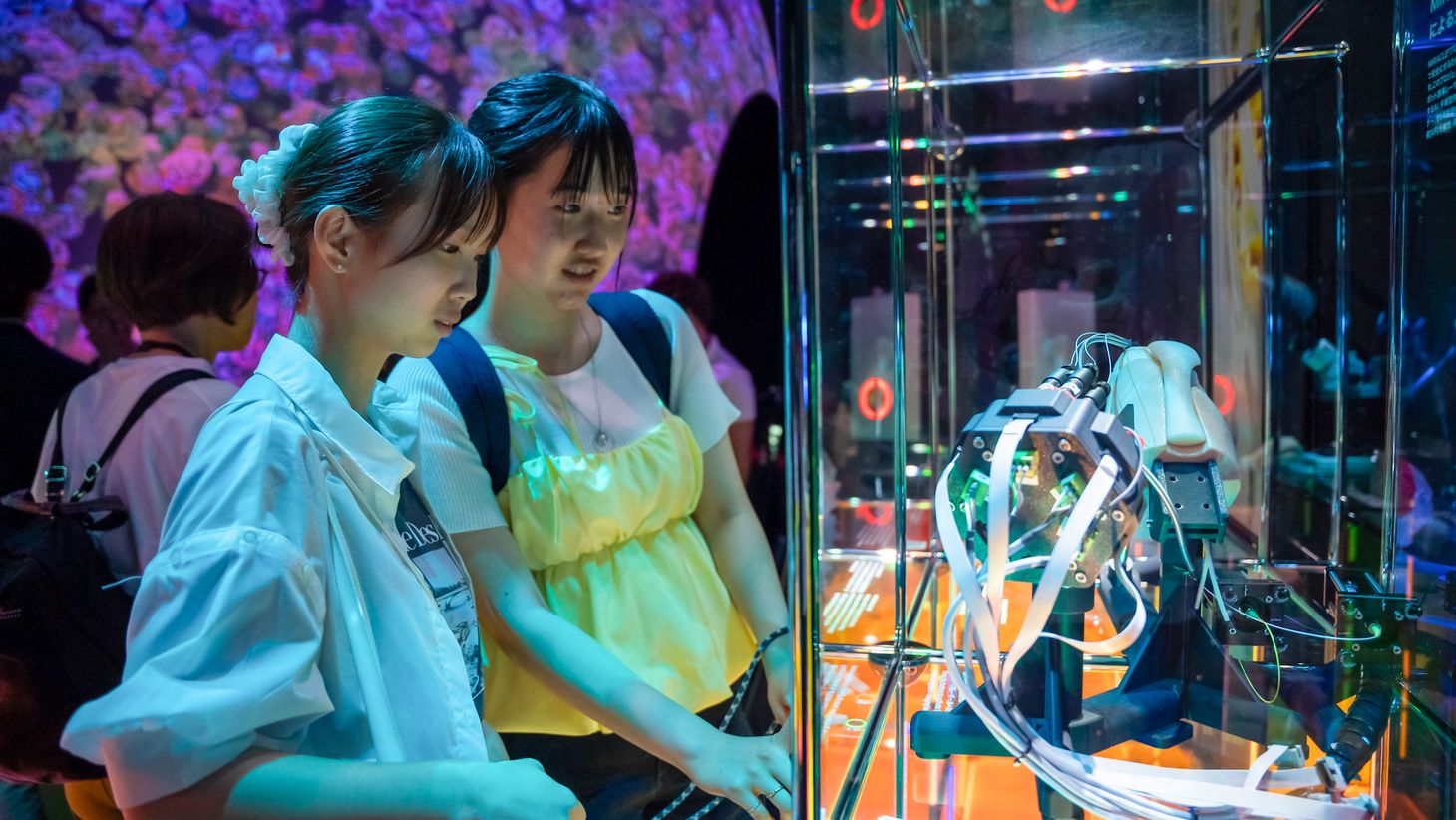
Another part of the display invited visitors to test a prototype of the laser robot that can cut through bone and tissue. For this, they used the tiny endoscope powered by an external drive system that was developed in Georg Rauter’s group. First they introduced the tiny device through a gap in a model knee joint, then, via a controller, they initiated two laser functions—cutting and determining how deep the cut should be—that were designed in the MIRACLE II research group led by Ferda Canbaz.
Research in action
To capitalise on the momentum gained at the World Expo, the MIRACLE II team partnered with the Karlsruhe Institute of Technology to organise a three-day event in Basel’s city centre near the famous Tinguely Fountain, where they set up a participatory mobile lab to introduce MIRACLE II technology to the local population—with an eye to fostering a better understanding of research and science.
The researchers once again adopted an engaging, accessible approach to presenting their complex work. At one station, visitors were invited to use a 3D headset not only to look inside the brain of a patient with an aneurysm—but also to play surgeon by virtually clamping the blood vessel at the bulge. Another stand sported a table football game, where the objective was to guide a laser beam, instead of a ball, into the goal. And children could print a personalised key chain bearing their name.
Philippe Cattin is very pleased with both public outreach activities. To be sure, the researchers were asked to invest quite a bit of time and energy in planning the events, he says, then adds: “But it was well worth the effort. We presented our research and innovative tools to an incredible number of people. And taking part in the World Expo was an excellent opportunity to deepen our ties with Japanese research institutions and industry partners.”
A first—and a secret
Last year, the MIRACLE II teams also made significant advances on the research front. In one remarkable development, Florian Thieringer’s group fitted a chin implant from their in-house 3D printing lab into a young adult. It was the first such surgical intervention at the University Hospital Basel with a chin implant fabricated directly at the hospital. This success built on personalised cranial roof implants the researchers had previously made in their printing lab. Thieringer and his group are aiming to continuously expand their portfolio of made-to-measure implants fabricated at the hospital; in the long term, they even plan to develop a system for printing the implants directly inside the body.
The researchers are unlikely to experience a lull anytime soon, Philippe Cattin says with a knowing smile. “Engineers in Ferda Canbaz’s laser lab are on the verge of realising another small miracle.” For now, however, patent and publication restrictions mean we’ll have to exercise patience until the MIRACLE II researchers can air the secret of their latest wonder.