A passion for new materials
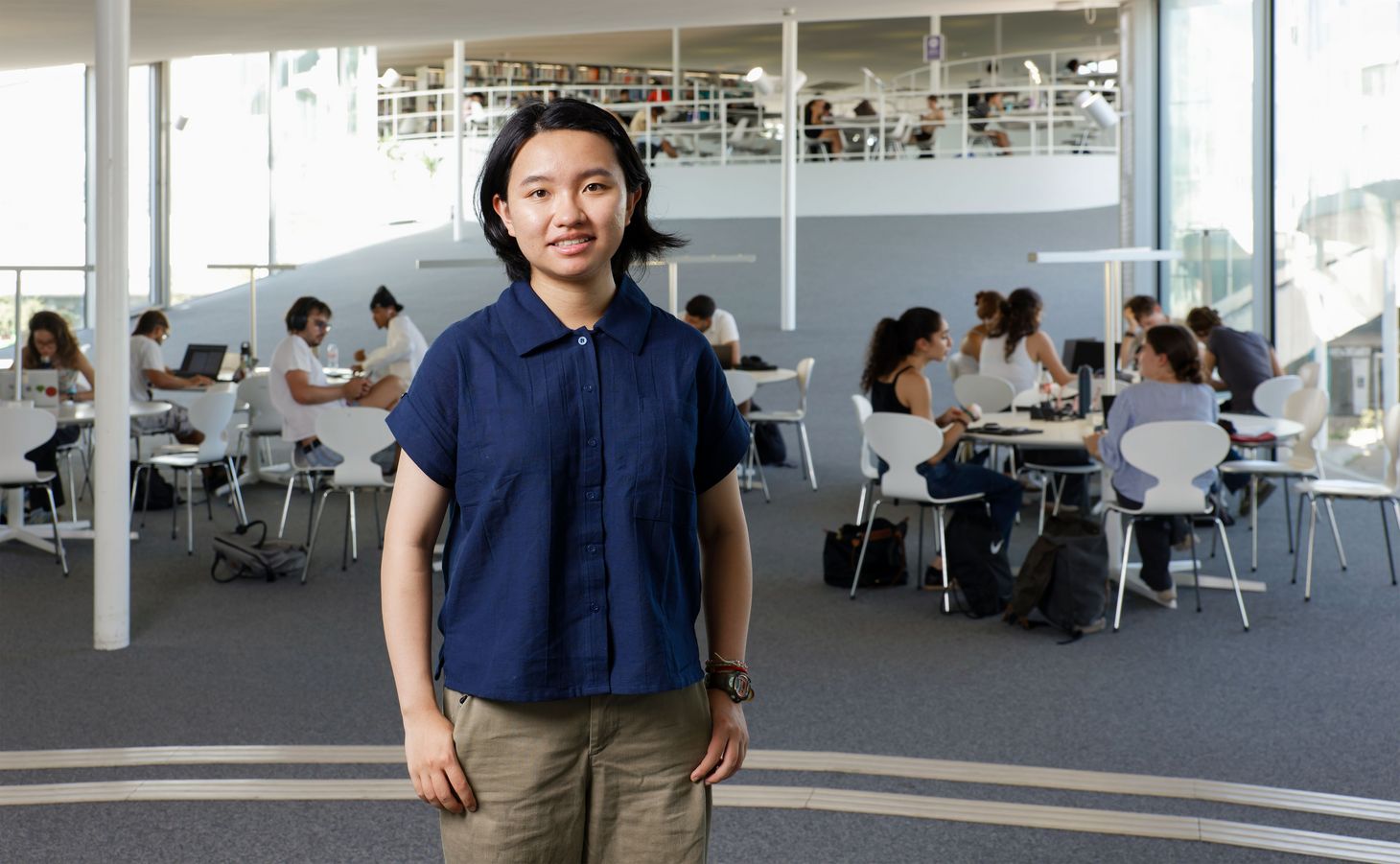
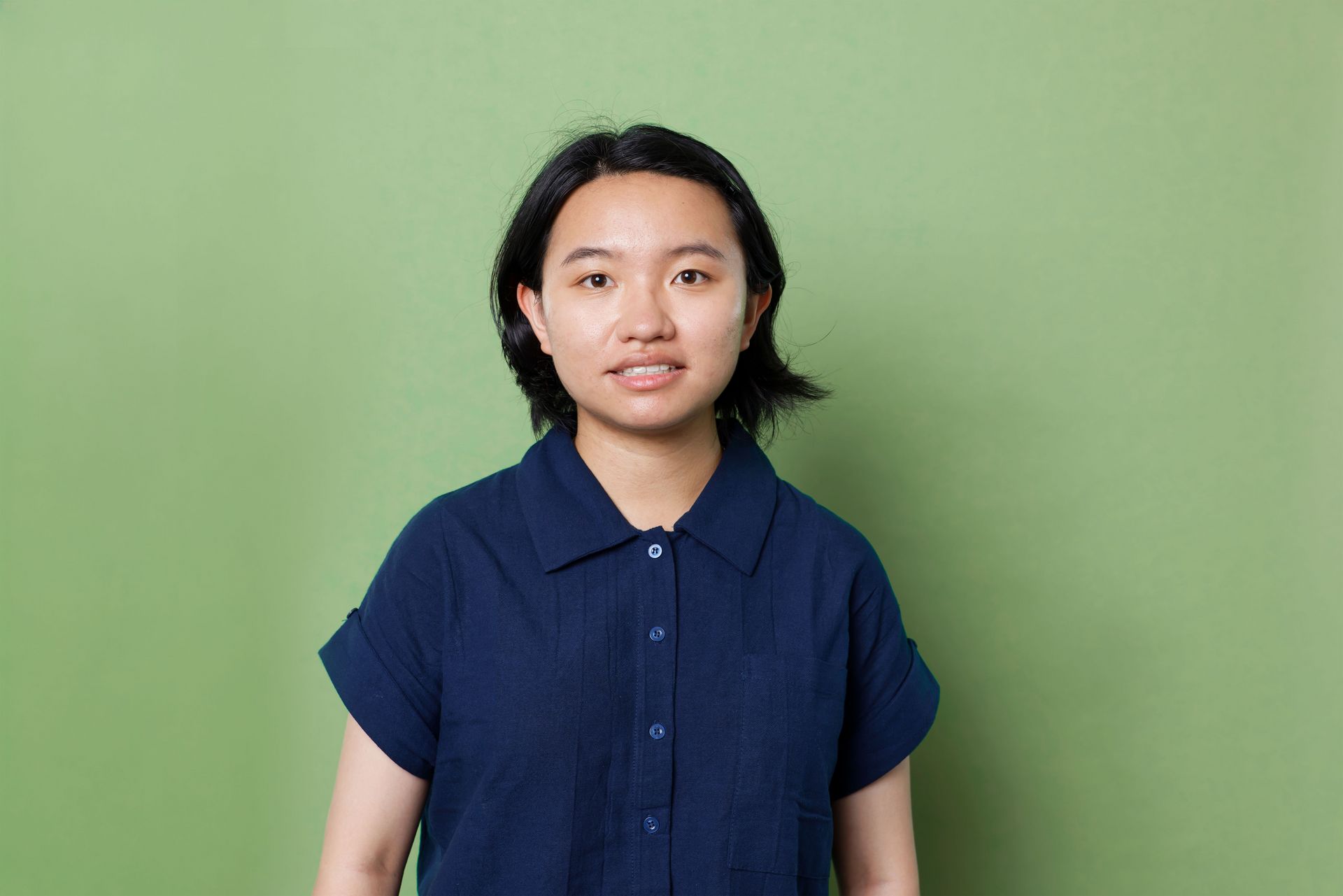
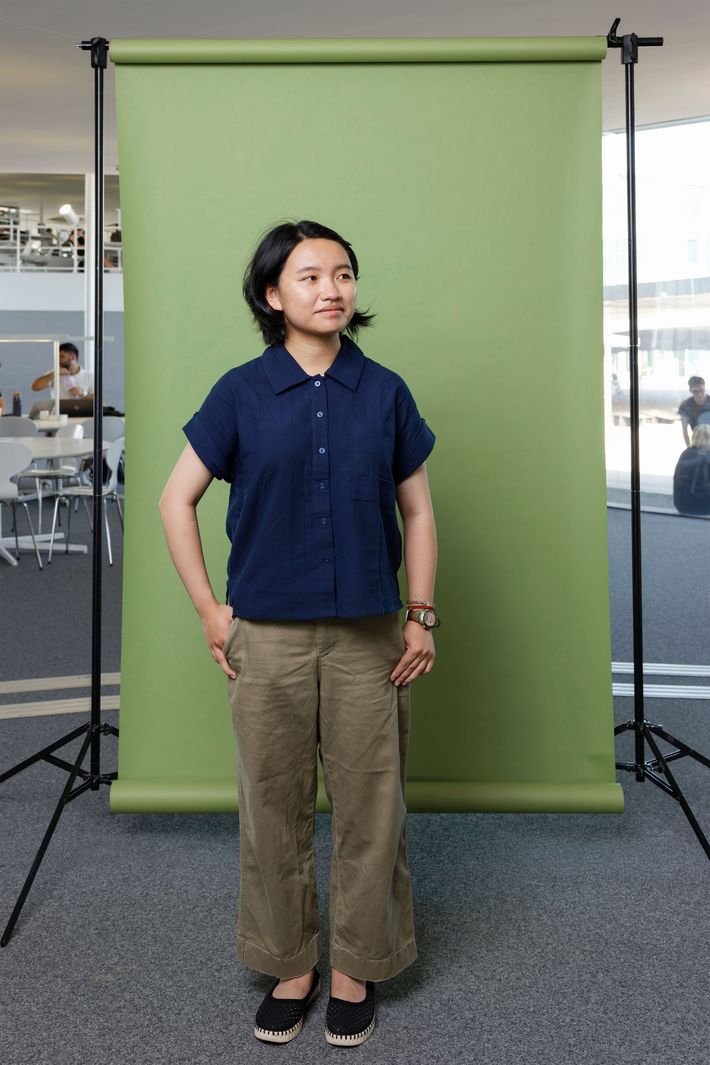
Regina Beytrison studies materials that will be used in the technologies of tomorrow, and she wants to share her knowledge with others. A Werner Siemens Foundation Fellowship from the Swiss Study Foundation is giving the EPFL microengineering student the freedom she needs to pursue her interests—and enabling her to look beyond her own area of study.
Regina Beytrison’s passion for her research becomes apparent as soon as she begins to talk about semiconductors and quantum effects, perovskite solar cells and novel kinds of batteries. She explains how a material’s conductivity can be inferred from its structure, and why such interrelationships could hold the key to future technologies.
That Beytrison, now twenty-two years old, would one day work in science was already clear when she was a child growing up in Crans-Montana in the Canton of Valais—and her dream was to become an astrophysicist. Beytrison’s mother encouraged her daughter’s inquisitive mind by buying her magnifying glasses, microscopes and science kits, all of which gave her access to the world of research at a young age. “My mother really supported me,” she says.
Despite this early interest, however, Beytrison’s path didn’t lead directly to science. “I took a detour through music,” she says with a laugh. She learned to play the cello, joined a student orchestra, and otherwise dedicated quite a bit of time to music during her five years at Lycée-Collège de la Planta, the upper secondary school in Sion. Beytrison believes she had this opportunity because upper secondary schools in Valais last a year longer than in many other Swiss cantons, making her schedule less stressful.
Using AI with caution
The musical detour notwithstanding, Beytrison never lost sight of the natural sciences. During her school years, she attended summer courses offered at EPFL, explored many topics independently, and tried out different subjects to discover what she was most interested in. She wrote her school dissertation on artificial intelligence at the time when ChatGPT and similar tools first began to draw more attention. Her main focus was the responsible use of AI.
Beytrison is still careful to use AI tools with great caution when gathering ideas or programming code. She’s convinced we can only truly understand and learn when we delve deeply into a topic on our own. And she says she has also experienced first-hand what can happen when we rely too heavily on AI-generated information. “Once I asked an AI to write a program, and it delivered a faulty code,” she relates. “There was no way I could fix the problem because I hadn’t written the code myself.”
Although she explored AI during her schooling, she never seriously considered studying computer science. “There are just too many other things I’m interested in,” she says. Not to mention many other subjects she excels in—she was the top student in her class at upper secondary school. In the end, she opted to study microengineering at EPFL, precisely because the study programme combines so many different disciplines: physics, mechanical engineering, electronics and computer science. “It was a very good decision,” she says with satisfaction. After all, an interdisciplinary study programme imparts knowledge from different subjects while also teaching students to recognise the connections between them.
Understanding materials
Beytrison is particularly interested in micro- and nanotechnology, as well as in materials that can be used to fabricate novel components. It’s an area in which a substance’s structure and properties are closely intertwined, as even minor changes to a material’s internal structure can influence how well the material conducts electricity or how it reacts to light.
In the meantime, Beytrison has completed her bachelor’s degree programme and is starting a master’s degree programme in microengineering, with a minor in quantum sciences and technology. The smaller a technical component is, she explains, the more impact quantum effects will have on its properties: “When working at this minuscule level, it’s important to understand which quantum effects arise there.”
A later career in developing quantum computers, however, is not her aim. Rather, she’s fascinated by semiconducting technology and materials science, although she hasn’t yet decided precisely where her academic path will lead. For now, she’s looking forward to a semester project involving a crystalline material called perovskite, which is considered to be a promising candidate for producing extremely powerful solar cells.
A year in Shanghai
It won’t be the first project Beytrison has completed during her studies. She has only recently returned from a year abroad at Shanghai Jiao Tong University, where she and four other EPFL students attended courses and participated in a research project investigating materials with potential for use in solid-state batteries. The results of the project, which isn’t yet completed, will later be presented in a scientific article.
Beytrison says that the university in Shanghai was very different to EPFL in Lausanne. At Swiss universities, students can choose several elective courses, and professors have more freedom to set their own priorities. In China, by contrast, the study programmes are more prescriptive, with stricter attendance rules. She also mentions that her Shanghai instructors often had very different expectations than their counterparts in Switzerland. For example, papers had to be written precisely according to a predefined structure.
Despite the cultural differences, Beytrison says her stay in the Chinese metropolis was a fantastic experience. That she began studying Chinese when she was five years old was also helpful, and the year-long stay was just the right length of time: it was long enough for her to reap benefits in her studies, improve her language skills and develop personally. She was also happy to return to Switzerland after the year was out. Since her return, Beytrison says she probably appreciates Swiss research even more than before. “There’s a climate here that’s really beneficial for good research.”
Making science accessible
In addition to gaining more knowledge, Beytrison is particularly keen to pass on her learning. She worked as a tutor during her school years and later acted as a science facilitator at EPFL events for primary schoolchildren and upper secondary students. In this capacity, she conducted experiments with students and explained phenomena from chemistry, robotics and electronics. While in Shanghai, she also tutored students in bachelor’s degree programmes in certain subjects.
Beytrison became part of the Swiss Study Foundation after her schooling. The foundation supports talented and ambitious students by offering financial support as well as courses, seminars and networking opportunities. Beytrison says she particularly benefited from a course that taught skills in writing a good CV and motivation letter. “I appreciated how much I learned about myself during the course,” she explains. In addition to the content of the various programmes, she also values the opportunity to meet students from other subject areas.
Freedom to pursue interests
It was during her stay in Shanghai that Beytrison came across information about applying for a Werner Siemens Foundation Fellowship. “I thought it might be a good fit, particularly because I’d like to get my foot in the door to research.” She applied—and in summer 2026 was named as one of the recipients of the excellence scholarships awarded to outstanding students in the fields of science, technology, engineering, mathematics, medicine and pharmaceutical sciences.
The fellowship gives her the freedom to continue pursuing her scientific interests. And she’s equally excited to be able to participate in the many different events offered in the fellowship programme. Indeed, although subject knowledge is critical in the world of research, Beytrison is keen to look beyond the borders of her own discipline. “I think it’s really important to consciously work on expanding my horizons,” she says. “Without external input, researchers in particular run a risk of developing tunnel vision.”
Text: Simon Koechlin
Translation: Mary Carozza