

Plastic-detecting peptides
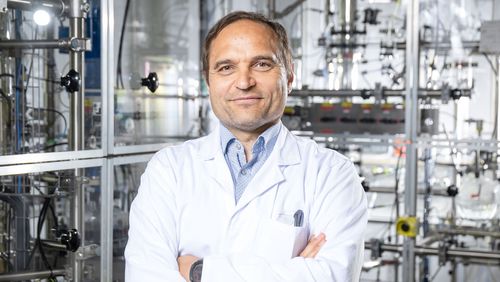
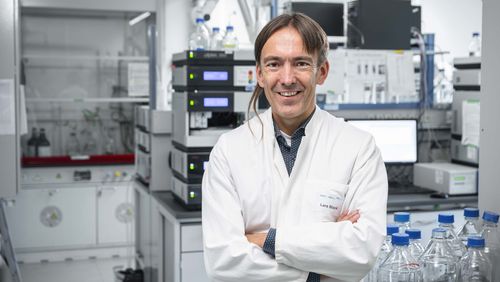
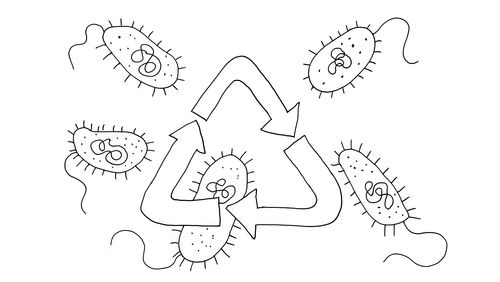
At the “catalaix” WSS Research Centre at RWTH Aachen University, Ulrich Schwaneberg and his team are using nature’s toolbox to combat major environmental challenges. Specifically, the researchers are developing material-binding peptides—peptides tailored to bind to specific material surfaces—to help efficiently detect, sort and break down plastics.
Nature is a virtuoso problem-solver, and the natural world offers solution pathways to problems that human scientists have only just begun to explore. Material-binding peptides, short chains of amino acids that bind specifically to targeted surfaces, are one striking example of nature’s problem-solving prowess. These compounds perform several vital functions in nature, including the ability to specifically recognize carbohydrates or other natural polymers in order to empower their modification or degradation.
Cellulose is a classic example of a natural polymer. A main component of plant cell walls and the most abundant organic compound on Earth, cellulose is a linear chain consisting of hundreds, even thousands, of glucose molecules. In the natural world, bacteria, fungi and plants have evolved specialised enzymes like cellulases that are capable of splitting cellulose polymers into their basic molecular components. “Most of these cellulases have a cellulose binding domain for the material-specific detection of naturally occurring polymers,” says Ulrich Schwaneberg, professor of biotechnology at RWTH Aachen University.
This “domain”—the binding peptide—functions like a mooring hook in that it secures enzyme-material binding and ensures that the degrading enzyme is correctly placed to efficiently work on “its” substrate. In addition to natural binding peptides for carbohydrates like cellulose, there are variants for numerous other natural surfaces—for instance, mussel shells, teeth, plant leaves, fruit and even hair. “Nature has developed a surprisingly large number of material-specific bindings in respect to the few chemical building block that nature uses in constructing its sophisticated composite materials,” Schwaneberg says.
Teflon, graphene, ceramics
Some fifteen years ago, Schwaneberg recognised that the same principle could open up exciting new perspectives for synthetic polymers and metal alloys at the interface of the fields of biotechnology and materials science. Through methods of protein engineering, material-binding peptides can be tailor-made for applications and technical usages such as functional coatings, biocatalytic surfaces, programmable release systems and innovative analysis methods—the potential applications are extremely interesting. “Over the past several years, we’ve compiled a collection of binding peptides that bind to many kinds of synthetic polymers like Teflon, polypropylene or graphene, ceramic surfaces as well as titanium alloys used in medical implants,” Schwaneberg explains.
Addressing synthetic polymers with material-binding peptides is at the core of the work conducted by Ulrich Schwaneberg’s research team at the “catalaix” research centre, in which researchers are engineering catalysis-driven methods to break down plastics into recyclable molecular components—with the overarching aim of creating a multidimensional circular economy. Material-binding peptides have the potential to play an instrumental role in achieving this aim because they can bind biological and chemical catalysts to specific synthetic polymer surfaces, thereby enabling catalysts to degrade the targeted materials or to mark them with fluorophores for detection.
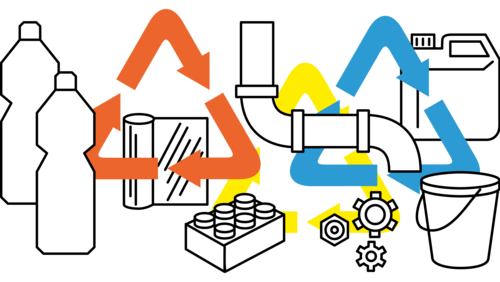
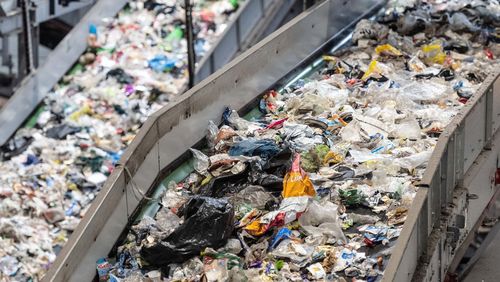
When processing plastic waste, one of the biggest challenges is that there are so many different kinds. Indeed, there are hundreds of different types of plastic, many of which contain additives such as plasticisers, stabilisers, flame retardants and dyes, all of which further complicate recycling since degrading enzymes are not directed to their targeted substrate. A mixture of these various plastics is found in typical recycling streams, and sorting the material for type-specific recycling is complex and costly.
Sorting waste with molecular markers
Materials recovery facilities generally use mechanical methods and infrared sensors to separate mixed plastic waste. One of the ideas pursued at “catalaix” is incorporating material-binding peptides to improve sorting technologies at these facilities. To this end, the researchers are seeking peptides that can bind to specific kinds of plastics—and that could act as molecular markers when coupled with special dyes. In this scenario, the peptides would be sprayed onto shredded plastic particles, which would then be sorted using optical sensors.
Another possible application relates to a key part of the “catalaix” project. By exploiting the ability of material-binding peptides to precisely position enzymes or chemical catalysts on a substrate, they could be instrumentalised to make the targeted chemical degradation of plastic waste more efficient. Here, the material-binding peptides would function as material-specific mooring hooks, much like the aforementioned processes in nature: the binding peptides secure the enzyme or chemical catalyst directly on the surface of the “right” polymer, thus boosting degradation efficiency in mixed plastic fractions.

Unterstanding material-specific binding
First, however, the researchers must lay the groundwork for these applications. “At “catalaix”, our main goal is to understand at a molecular level how peptides can bind specifically to different kinds of plastics,” Schwaneberg says. To develop the necessary knowledge, all possible blueprint variants of binding peptides must be screened. A typical material-binding peptide consists of several dozen amino acids. Because there are twenty different amino acids in proteins per building, the number of possible combinations become astronomically high—which represents both an opportunity and a challenge. Advantages arise because this diversity means binding peptides can bind to synthetic polymers as specifically as antibodies. The challenges lie mainly in producing and screening all the possible variants.
Schwaneberg’s group has developed methods for efficiently generating and identifying variants that bind strongly with a high-material specificity. At the same time, the researchers are seeking to understand the most important interactions that take place between peptides and surfaces. “In a step-by-step process, we’re screening the entire spectrum of natural variants at each binding peptide position. This enables us to identify material-specific binding motifs and gain a greater understanding of binding mechanisms,” Schwaneberg says. In a recently published study (1), he and his team used their method to investigate ways of improving the binding of a bacterial peptide to the synthetic polymer polystyrene.
New cloning platform
Other studies have shown that some peptides are able to bind to several different kinds of plastics. When minor modifications are made, this ability can be rendered more specific—for example, the researchers experimented with a peptide that binds to both PET and polystyrene. “However, when we remove the aromatic amino acid phenylalanine, the peptide will still strongly bind to PET but loses its ability for strong polystyrene binding,” Schwaneberg explains. Such findings are crucial for developing peptides that bind to exactly one type of plastic.
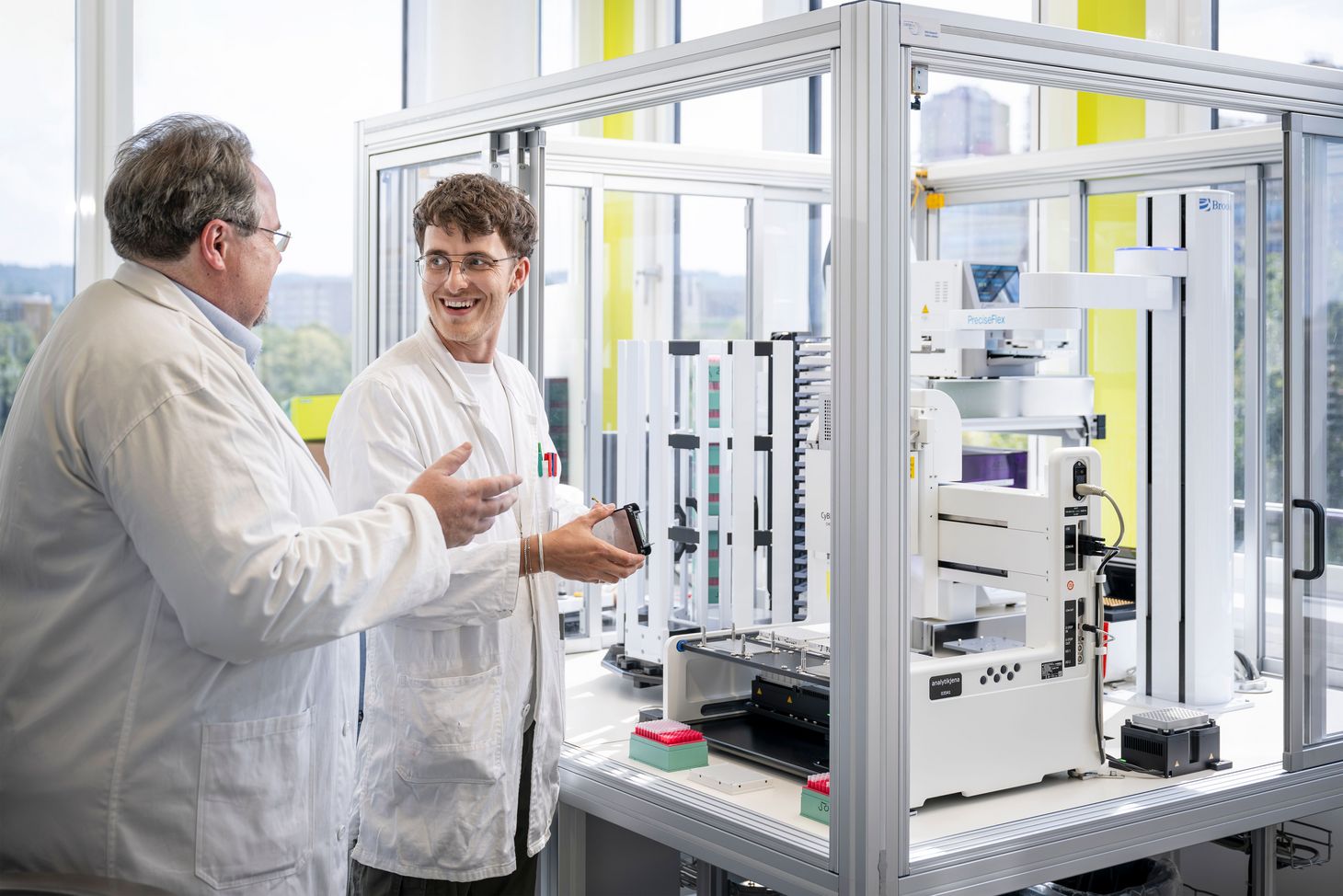
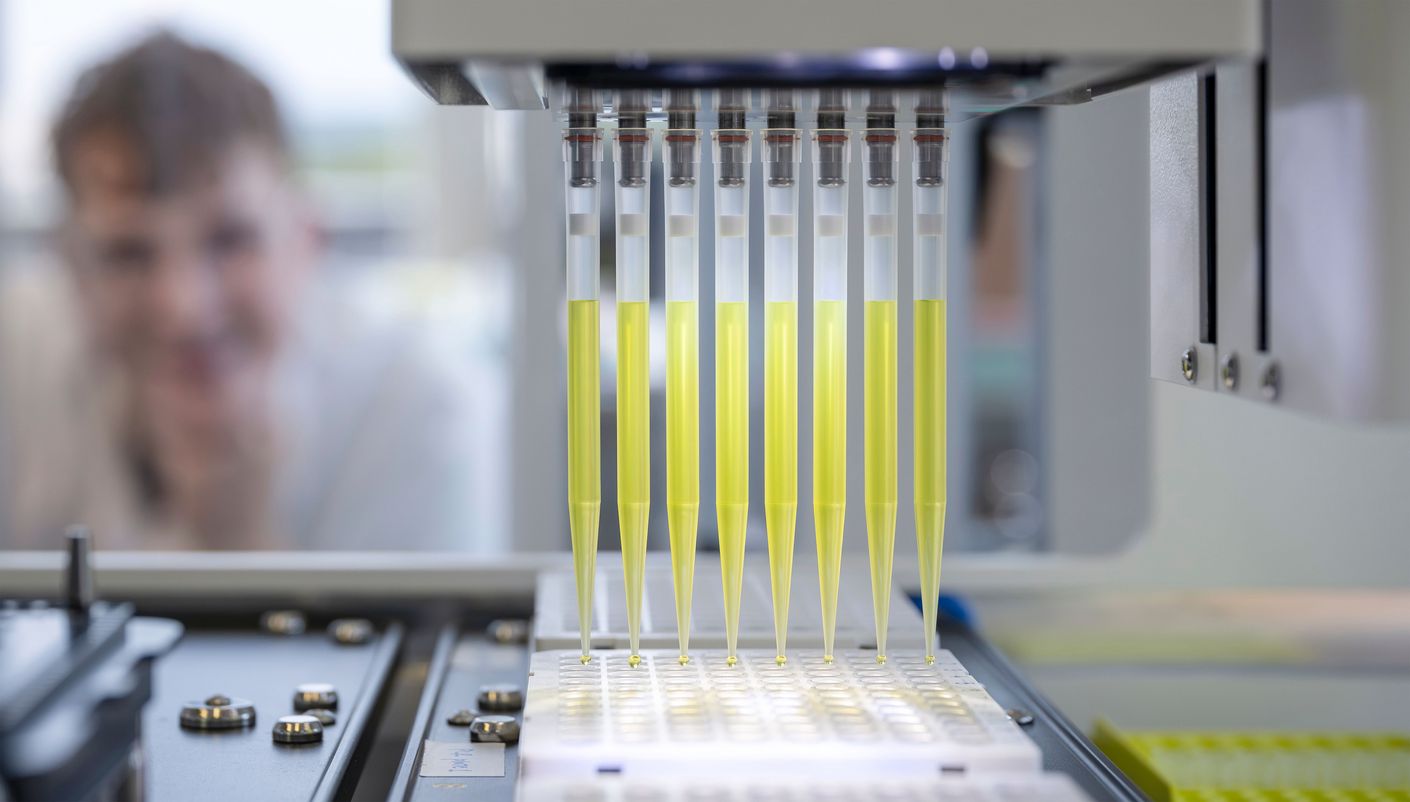
Two PhD students in the “catalaix” project are currently using computer-aided models to study the interactions between polymer surfaces and binding peptides, with the medium-term aim of compiling a library of material-specific binding peptides for a wide range of synthetic polymers. This endeavour is aided by an automated cloning platform that the research team was able to purchase with funding from “catalaix” project. “With the new platform, we can rapidly generate a large number of material-binding peptide variants that we subsequently test for their binding properties,” Schwaneberg says. Automation saves time, reduces errors and improves the comparability of results.
Filtering out microplastics
These material-binding peptides have enormous potential. Schwaneberg has already patented a method for removing micro- and nanoplastics from the environment. The principle that his group has developed, validated—and recently published (2)—is surprisingly simple: “We ‘decorate’ magnetic particles with material-binding peptides that bind to the most common synthetic polymers and transfer them into a water sample and stir for a few minutes,” Schwaneberg explains. “Subsequently a magnet is used to attract and remove the magnetic particles with the bound nano- and microplastics.” Afterwards, the type and amount of nano- and microplastic can be determined using standard analysis methods, as the study showed. A one-litre water sample is already sufficient to assess the levels of micro- and nano-plastic contamination in rivers for instance.
Schwaneberg’s research group also develops applications that are unrelated to the “catalaix” research centre. One such project involves material-binding peptides that to functional medical implants with biological functions such kill and repel coating with anti-microbial and anti-fouling properties. In another application area, the researchers are developing binding-peptide methods to detect microcracks in aeroplane parts on site via UV light exposure. Finally material binding peptides can be used to reduce pesticides application. Here, peptides are designed to strongly adhere to the leaves and a fused microgel container releases pesticides such as copper-salts slowly to prevent apple scab. “In greenhouses, this resulted in a forty-fold reduction in the amount of copper used,” Schwaneberg says.
Efficient and inexpensive
These various applications are made possible thanks to one specific characteristic of the peptides: even tiny amounts are enough to achieve an enormous level of surface coverage. “Just one gram suffices to cover an area of some two hundred and fifty square metres,” Schwaneberg says. He adds that, already on the lab scale the researchers can biofunctionalise surfaces for less than half a euro cent per square metre—and that the employed methods, dip and spray coating, can be scaled up at a low cost. Additionally, material-binding peptides can as all natural polymers be fully biodegraded with tuneable biodegradation kinetics.
All of which is to say that the prospects are good for employing material-binding peptides in a broad spectrum of biotechnological applications. The “catalaix” research centre, too, is benefiting from the molecules that fit with specific materials the way a key fits into a lock—and that will play an instrumental role in reintroducing used plastic products back into the production cycle.
Text: Simon Koechlin
Translation: Mary Carozza
> Study (1)
> Study (2)