

Lactic acid bacteria and chemical radars
In their search for prehistoric active compounds, researchers in the palaeobiotechnology project in Jena are continually refining their methods—to great effect, as evidenced by the excellent progress and numerous discoveries they made last year.
A brief conversation with Christina Warinner and Pierre Stallforth is enough to reveal that their palaeobiotechnology project in Jena is making astonishing leaps forward. Scientific advances, new publications, awards, major events: the two project leaders recount one achievement after the other.
For instance, papers on projects they’ve been working on for years are now set for publication, including a study describing how the team were the very first to reproduce a prehistoric molecule that exhibits antimicrobial activity. Christina Warinner is not yet able to provide details about the research because the upcoming publication is still undergoing peer review. “But we’ve demonstrated that it’s possible to obtain antibiotic substances from prehistoric microbes.”
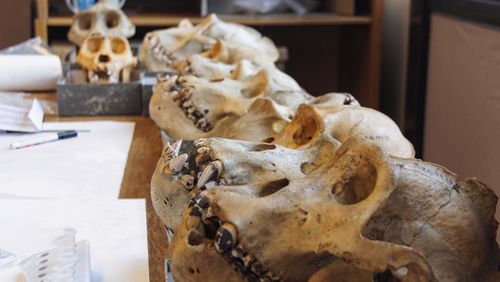
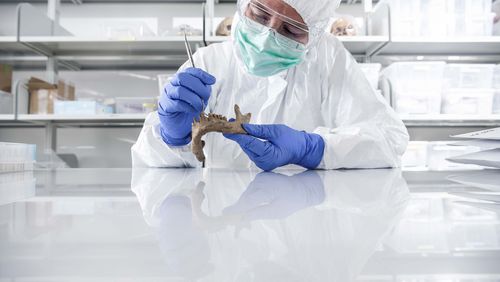
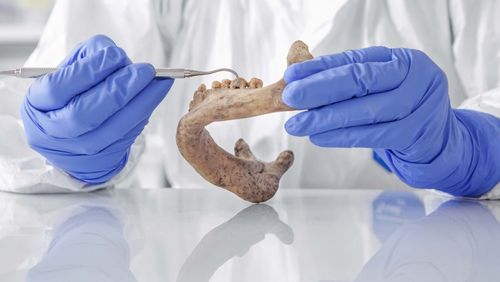
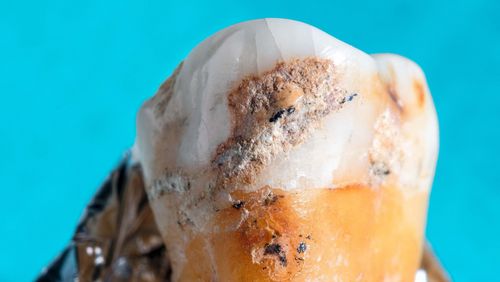
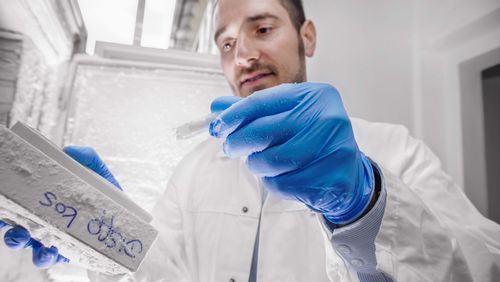
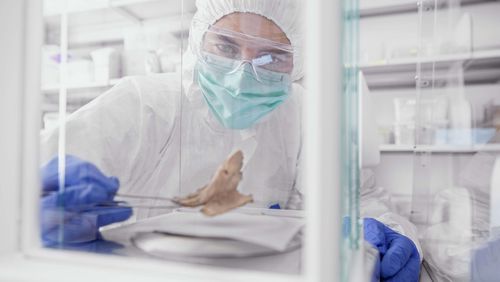
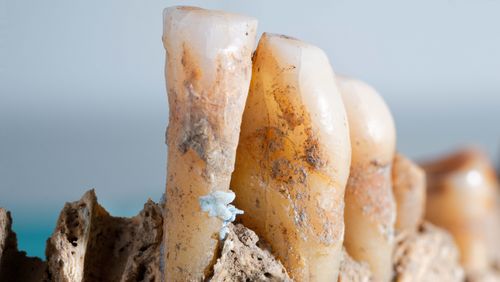
The discovery was certainly not down to luck. The researchers had already developed automated processes for systematically analysing ancient genetic material and then filtering out the most promising candidates. Simultaneously, they’re rapidly expanding the data pool for their work. As a result, a new catalogue of microbial genomes found in dental calculus is nearing completion. “We’ve discovered a high number of completely new microbes whose functions we’re now trying to understand,” Pierre Stallforth says.
Microorganisms in Mongolia
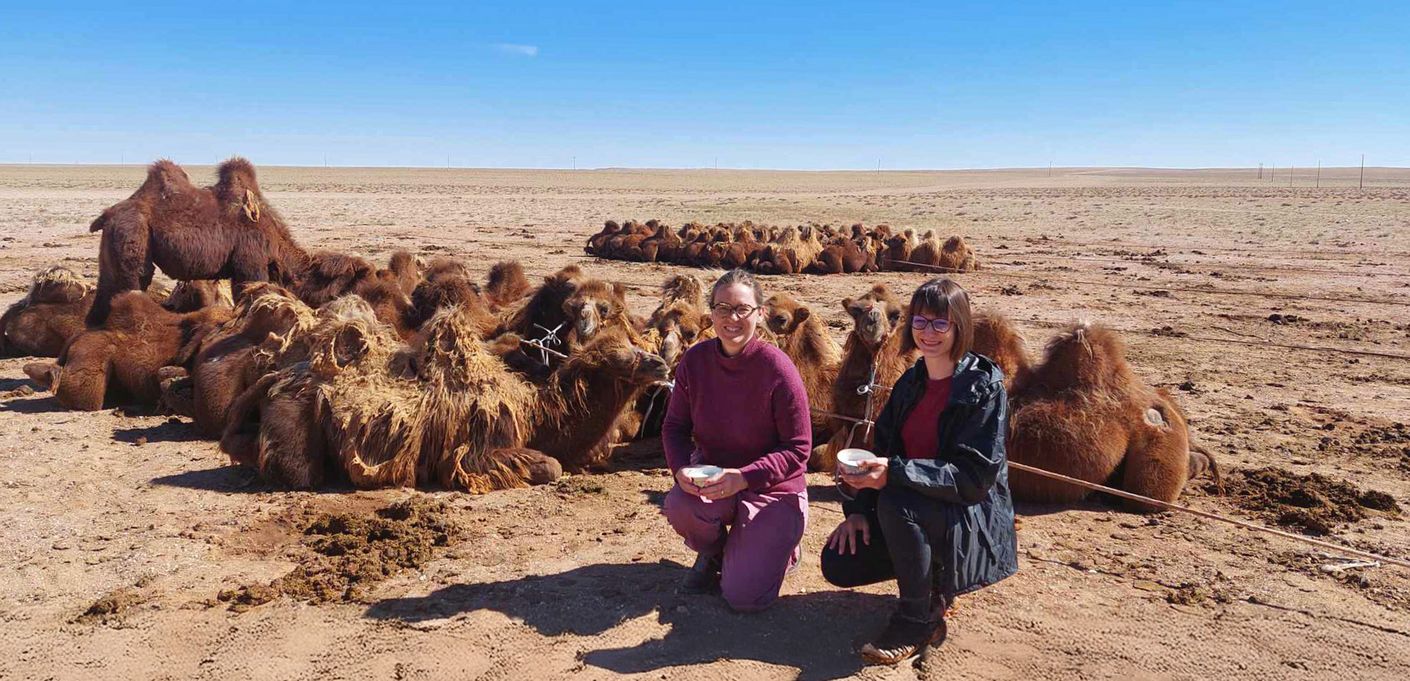
Another part of the project has also gained momentum. The team discovered that decoding the DNA found in prehistoric bones or dental calculus isn’t the only way to search for ancient microorganisms—they can also be found in milk products. Humans have consumed milk, butter, cheese, yoghurt and curds for more than nine thousand years, and these dairy products provide an ideal habitat for many microorganisms.
Microbes are instrumental in the production of dairy products because they facilitate fermentation, which transforms raw milk and preserves the resulting products. “However, the old, traditional fermentation bacteria we’re interested in are now found in only a few places around the world,” Warinner says. “In most places they’ve been replaced by improved, standardised strains.”
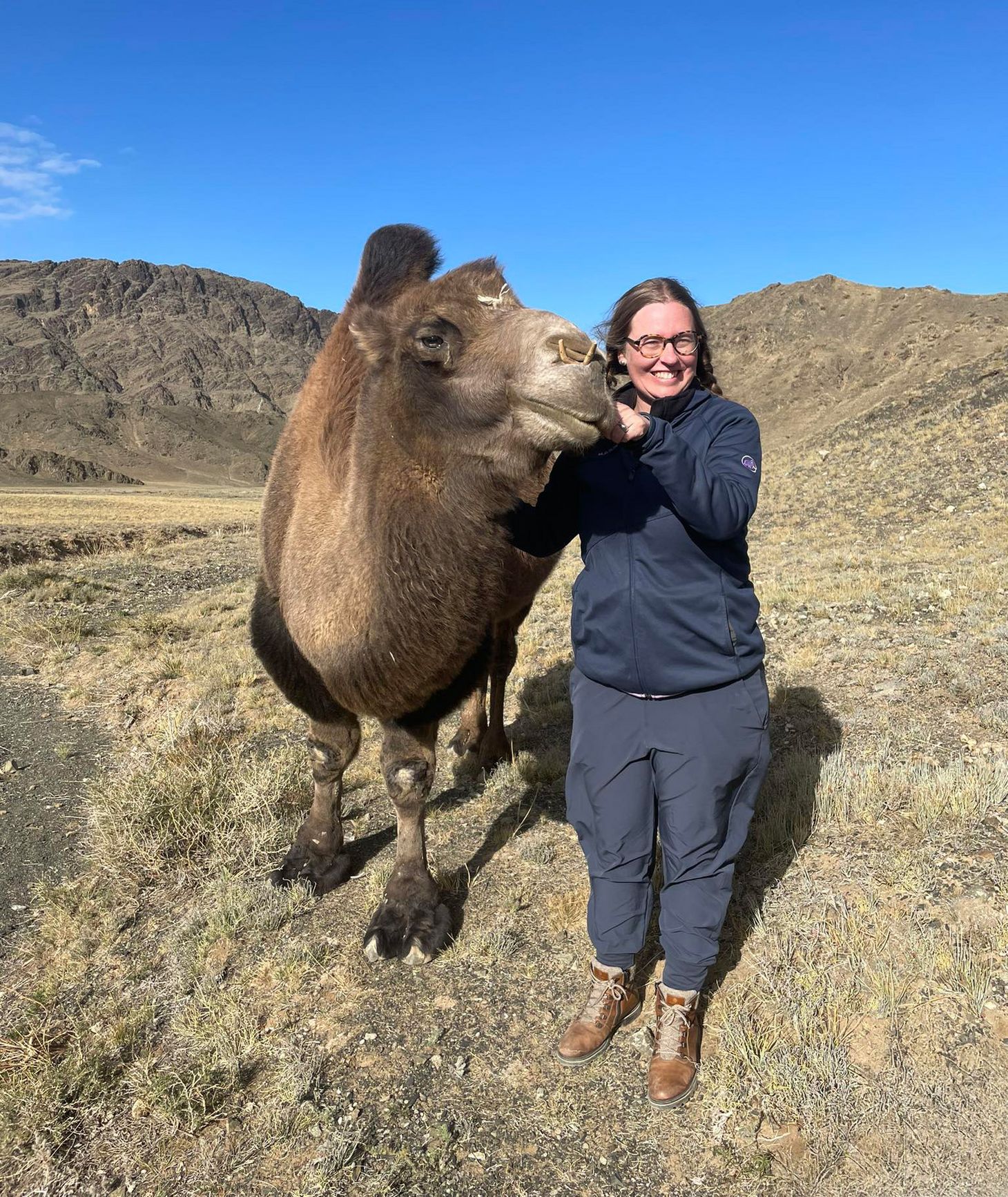
One country with a particularly rich dairying tradition is Mongolia, where dairying practices date back roughly five thousand years and have remained largely unchanged over the centuries—a highly promising point of departure for the palaeobiotechnology team, who have been conducting studies in Mongolia for quite some time. Last year, Warinner, Stallforth and Stallforth’s PhD student Ina Wasmuth published a paper in science journal Natural Product Reports in which they discuss microbial molecules in milk, primarily in Mongolian dairy products.
Microbial warfare
Another major paper appeared in top-tier journal Cell. A team led by Pierre Stallforth examined the interplay between a bacterium, an amoeba and a plant. The bacterium is a ubiquitous plant pest, while the amoeba preys on the bacterium. However, the bacterium can reverse these roles—with the help of a chemical “radar”. “We observed a type of complex arms race that operates via chemical molecules,” Pierre Stallforth explains.
The bacterium makes the first move by secreting molecules that enable it to move in a swarming motion. The compound poses no threat to the amoeba, which, however, modifies the chemical structure of the molecules when they come into contact. However, the bacterium possesses a secret weapon: a special sensor protein that recognises these modified molecules—hence the presence of the predator—and then transforms them into toxins capable of killing the amoeba. Thanks to this clever strategy, the bacterium can infect a plant even when the enemy is close at hand.
Pierre Stallforth says that very little research has been dedicated to these types of complex relationships based on microbial signalling molecules. “I’m certain that many more examples will be described in the coming years. And the techniques we’ve developed in the WSS project will be instrumental in detecting them.”
Funding for cluster of excellence
Investigating these kinds of microbial interactions is a research priority in the “Balance of the Microverse” cluster of excellence in Jena, where the groups led by Pierre Stallforth and Christina Warinner play a key role. In spring 2025, the cluster received approval for a second, seven-year funding period with a budget totalling tens of millions of euros.
The palaeobiotechnology project is gaining wider scientific recognition in other areas as well. For instance, Christina Warinner was invited to Stockholm in May to discuss ancient microbial research at a Nobel symposium on palaeogenomics. She also received the highest prize in anthropology from the American Association for the Advancement of Science (AAAS) for her contributions to the field.